
Fibre Decoded
Short, clear reads on fibre.
Fibre Decoded explains digestion, plant fibres, food structure, and daily fibre use in short articles. No miracle claims — just one clear explanation at a time.
All short reads
A growing library of short fibre reads.
Newest articles appear first. Each one stays close to digestion, food structure, daily use, and the practical behaviour of plant fibres.
What Makes a Fibre Product High Quality?
What actually separates a high quality fibre product from an average one: raw material, testing, formulation and label clarity.
Read short noteWhy Fybrance Believes in Transparent Fibre Products
The honest middle Fybrance is trying to build between raw, unexplained commodities and polished wellness blends with hidden proportions.
Read short noteFibre Myths: 20 Things People Get Wrong About Fibre
Twenty common fibre myths, from 'juice equals fruit' to 'one capsule fixes the microbiome,' corrected quickly and without the jargon.
Read short noteThe Complete Fybrance Guide to Daily Fibre
A single starting guide to daily fibre: the Indian food swaps that build it, the main fibre types to know, and where a supplement honestly fits.
Read short noteHow to Choose the Right Fibre Supplement for Your Routine
A practical framework for matching a fibre supplement to your actual goal, whether that is regularity, tolerance, microbiome support or fullness.
Read short noteFibre Supplements for Beginners: Start Here
A beginner's four step starting point for fibre supplements: fix the food first, choose by behaviour, dose small, and track how you actually feel.
Read short noteWhy More Fibre Is Not Always Better Immediately
Why the gut needs time to adapt to more fibre, and why adding everything at once usually backfires instead of helping.
Read short noteCan Children, Seniors and Pregnant Women Take Fibre Supplements?
Why children, seniors and pregnant women need different fibre advice rather than one generic rule, and when each group should involve a doctor.
Read short noteWho Should Be Careful Before Taking Fibre Supplements?
The specific health conditions, medicines and allergies that call for medical advice before starting a fibre supplement, even a common one.
Read short noteButyrate vs Prebiotic Fibre: What Is the Difference?
Prebiotic fibre feeds gut bacteria; butyrate is one of the things they produce from it. Understanding the difference before choosing either.
Read short noteWhy Fybrance Has Not Launched a Butyrate Product, and Why That Is Deliberate
Why Fybrance has not launched a postbiotic butyrate supplement yet, the regulatory question behind that decision, and how fibre already supports butyrate production.
Read short noteResistant Starch vs Psyllium: Very Different Fibres, Very Different Roles
Resistant starch and psyllium are both called fibre but behave in opposite ways. A clear guide to choosing between them by purpose.
Read short noteWhy Not All Fibre Has to Gel
Why psyllium's thick gel is only one kind of fibre behaviour, and how PHGG, acacia and resistant starch offer lighter alternatives for different jobs.
Read short noteThe Future of Fibre: From Constipation Remedy to Microbiome Nutrition
How fibre's reputation is shifting from an emergency constipation fix to an everyday tool for the microbiome, satiety and heart health.
Read short noteWhat Is Resistant Starch?
What resistant starch actually is, which everyday foods contain it, and why cooking and cooling change how much of it you get.
Read short noteRaw Banana Flour and Resistant Starch: What Makes It Interesting?
Why raw banana flour is worth understanding as a resistant starch source, how to use it in Indian cooking, and who should check portions first.
Read short noteCooked and Cooled Rice or Potato: Does It Change the Starch?
The real science behind cooling cooked rice or potato, why it changes the starch, and why that is not a licence for bigger portions.
Read short noteWhat Is Butyrate and Why Is It Discussed in Gut Health?
What butyrate is, why colon cells use it as fuel, and the everyday Indian foods that help your own gut bacteria produce more of it.
Read short noteFibre, Fermentation and Short Chain Fatty Acids Explained Simply
How gut bacteria ferment fibre into short chain fatty acids like butyrate, and why psyllium sits outside that fermentation process entirely.
Read short noteWhat Diabetologists Often Tell Patients About Fibre
The consistent, unglamorous advice diabetologists and dietitians give about diet, and how it translates onto an everyday Indian thali.
Read short noteFibre and Cholesterol: What Is the General Connection?
How certain soluble fibres interact with bile acids and cholesterol metabolism, and why that is a reason to eat better, not to stop taking prescribed medication.
Read short noteWhy Soluble Fibre Is Often Discussed in Heart Health Diets
Why soluble fibre keeps coming up in heart health conversations, and how psyllium and oat beta-glucan differ from gentler fibres like acacia and PHGG.
Read short noteThe Indian Diabetes Plate: Where Fibre Fits
Building an Indian diabetes plate around vegetables, protein and fibre first, with grain portion as the last decision rather than the first.
Read short noteFibre Supplements and Medication Timing: What to Ask Your Doctor
Why fibre supplements can interfere with how some medicines are absorbed, and the specific questions worth asking your doctor before making one a daily habit.
Read short noteWhy Fibre Matters in a Carb Heavy Indian Diet
Why carbohydrate heavy staples like rice, roti and poha are not the problem on their own, and how fibre changes the way those meals behave in the body.
Read short noteFibre and Blood Sugar: What Should Consumers Understand?
What is actually known about fibre and blood sugar response, why the whole meal matters more than any single ingredient, and where medical advice should take over.
Read short noteHow to Improve a Rice Plate with More Fibre
A practical, step by step way to add fibre around a rice based meal without cutting out rice itself.
Read short noteHow to Improve a Roti Sabzi Meal with More Fibre
Why the words roti sabzi do not guarantee a fibre rich meal, and the specific changes to atta and vegetables that actually move the needle.
Read short noteWhole Fruit vs Fruit Juice for Metabolic Health
Why whole fruit and fruit juice behave differently in the body, and why that difference matters more once metabolic health is the goal.
Read short noteFibre and Snacking: Why Low Fibre Foods Do Not Keep You Full
Why biscuits and packaged snacks disappear too fast to satisfy hunger, and the fibre forward alternatives that actually last through the afternoon.
Read short noteHow to Build a More Filling Breakfast
Why breakfast needs both protein and fibre to actually last, with practical upgrades to poha, upma, idli, eggs and paratha.
Read short noteMeal Replacement Powders and Fibre: What to Look For
Why a meal replacement powder should be judged on its fibre content and transparency, not on its protein number alone.
Read short noteSatiety Fibre vs Prebiotic Fibre: Same or Different?
Satiety fibre and prebiotic fibre can overlap, but they solve different problems. How to tell which one your actual goal needs.
Read short noteFybrance Satiety: The Logic Behind a Fullness Focused Fibre Blend
The formulation logic behind Fybrance Satiety: why psyllium and a small measured amount of konjac are used for fullness, and the honest limits of a satiety claim.
Read short noteWhat Is Satiety and Why Does Fibre Matter?
What actually creates satiety beyond just eating more, and why fibre's role in bulk, chewing and water holding matters as much as protein.
Read short noteProtein Is Not Enough: Why High Protein Diets Still Need Fibre
Why whey, eggs, chicken and rice heavy diets quietly become low fibre diets, and the small additions that fix it without slowing progress.
Read short noteWhy Gym Diets Often Become Low Fibre Diets
Why a clean looking, high protein gym diet can still leave you heavy, hungry or constipated, and the plant additions that are usually missing.
Read short noteHow Fibre Helps You Feel Fuller After Meals
The three concrete ways fibre creates fullness, from chewing time to gut viscosity, explained through everyday Indian meals.
Read short noteThe Best High Fibre Additions to a Protein Diet
The specific vegetables, legumes, seeds and fibre sources worth adding to a protein-focused diet, without displacing the protein itself.
Read short noteThe Difference Between Cultivate and Nourish
How Cultivate (fibre plus live strains) and Nourish (fibre alone) are built around genuinely different jobs, and why the two should never be confused.
Read short noteWhy Microbiome Health Is Not Built by One Capsule Alone
Why sleep, stress, antibiotics and meal timing shape the microbiome as much as any single probiotic capsule does.
Read short noteGut Diversity: Why Eating Different Plant Foods Matters
Why counting plant variety across a week matters more for gut diversity than any single superfood, with a practical Indian weekly target.
Read short noteShould Everyone Take Probiotics?
Why probiotics are not a universal daily requirement, and who should check with a healthcare professional before starting live strains.
Read short noteHow to Build a Microbiome Friendly Indian Plate
A practical, section by section method for building a microbiome friendly Indian plate around grain, pulse, sabzi and fermented foods.
Read short notePrebiotic vs Probiotic vs Postbiotic: What Do These Words Mean?
Prebiotic, probiotic and postbiotic: three similar sounding words with genuinely different meanings, explained without the jargon.
Read short noteWhat Are Live Strains and Why Do People Take Them?
What live strains actually are, why strain identity and viable count matter more than the word probiotic on its own, and who should ask a doctor first.
Read short noteWhy Probiotics Need the Right Diet Around Them
Why a probiotic capsule cannot outrun a low fibre diet, and how ordinary Indian meals create the environment live strains actually need.
Read short noteCan Fibre and Live Strains Be Taken Together?
What a synbiotic actually is, how fibre and live strains work together when paired thoughtfully, and how to introduce both without overwhelming a sensitive gut.
Read short noteWhat Makes a Good Gut Routine Beyond Probiotics?
Why a good gut routine rests on food, sleep, movement and water more than on any single probiotic capsule.
Read short notePHGG vs Acacia Fibre: How Are They Different?
PHGG and acacia fibre are both gentle and soluble, but not identical. How to tell them apart and choose between them by purpose, not trend.
Read short noteInulin, FOS and GOS: Popular Prebiotics Explained Simply
Inulin, FOS and GOS explained simply: what makes them effective prebiotics, and why that same strength means they need a slow, careful introduction.
Read short noteWhy Some Prebiotics Cause Gas and Some Feel Gentler
Why some prebiotic fibres ferment fast and cause gas while others feel gentle, and how dose, speed and food pairing change the experience.
Read short noteHow to Choose a Prebiotic Fibre for Daily Use
A practical framework for choosing a prebiotic fibre for daily use, based on purpose and tolerance rather than what the packaging promises.
Read short noteFybrance Nourish: The Logic Behind a Prebiotic Fibre Blend
The formulation logic behind Fybrance Nourish: a prebiotic fibre blend built to feed the gut environment, kept deliberately separate from psyllium's gel forming job.
Read short noteWhat Are Prebiotics and How Are They Different from Probiotics?
The simple difference between prebiotics and probiotics, explained through food, and why one without the other rarely does much on its own.
Read short noteWhy Your Gut Bacteria Need Fibre
What gut bacteria actually eat, how fibre and resistant starch reach them, and why a repetitive refined diet gives them less to work with.
Read short notePrebiotic Fibre vs Regular Fibre: Is There a Difference?
Why all prebiotic fibre is fibre, but not all fibre is prebiotic, and how that one distinction should actually change what you buy.
Read short noteWhat Is PHGG and Why Is It Used in Gut Health Products?
What PHGG (partially hydrolysed guar gum) is, how it differs from psyllium in texture and behaviour, and why it shows up in gentler gut health products.
Read short noteWhat Is Acacia Fibre? A Gentle Soluble Fibre Guide
What acacia fibre is, where it comes from, and why its light, low-gel character makes it a common choice for gentle daily gut health routines.
Read short noteGut Transit Time: What Fibre Has to Do with It
What gut transit time means, how different fibre types speed it up, slow it down or add structure, and where daily habits fit in.
Read short noteWhy Water and Fibre Work Together
Why fibre and water are inseparable, especially with gel forming psyllium, and the practical habits that keep both in balance through the day.
Read short noteFibre for People Who Travel Often
How travel quietly disrupts digestion through irregular meals and low water intake, and a realistic, travel friendly way to protect fibre habits.
Read short noteFibre for Office Workers Sitting All Day
How a normal office day quietly turns low fibre through small choices, and easy desk-side swaps that fix it without a diet plan.
Read short noteThe Gut Routine Checklist: Food, Fibre, Water, Movement and Timing
A simple daily checklist covering food, fibre, water, movement and timing that supports a steady, comfortable gut routine.
Read short noteHow Fibre Supports Everyday Digestive Regularity
How fibre actually supports day to day regularity through bulk, water holding and gut bacteria, and why one meal alone never solves it.
Read short noteConstipation and Fibre: What People Often Get Wrong
Why constipation is rarely a fibre-only problem, and the water, movement and warning sign checks people tend to skip.
Read short noteWhy Some Fibre Causes Bloating
Why fermentable fibres like inulin and legumes can cause gas while psyllium behaves completely differently, and how to introduce either one comfortably.
Read short noteHow to Increase Fibre Without Upsetting Your Stomach
A gradual, food first method for raising fibre intake without the gas and bloating that come from moving too fast.
Read short noteWhat Is Stool Normalisation and Why Fibre Type Matters?
What stool normalisation actually means, and why a gel forming fibre like psyllium can help with both hard and loose stools rather than just one.
Read short noteWhy You Should Start Psyllium Slowly
Why a sudden, full dose of psyllium is the most common beginner mistake, and how a slow, gradual start makes the habit stick.
Read short noteMorning or Night: When Is the Best Time to Take Psyllium?
Why there is no universal best time to take psyllium, and how to choose a slot around your meals, water intake and any regular medication.
Read short noteCan Psyllium Be Taken Daily?
Whether daily psyllium use makes sense for you, and the food first, water always, dose gradually rules that make it sustainable long term.
Read short noteCommon Mistakes People Make with Isabgol and Psyllium
The small mixing, timing and dosing mistakes that make isabgol unpleasant, and the warning signs that call for a doctor, not a bigger spoonful.
Read short noteWhy Smooth Psyllium Matters: Texture, Mixing and Compliance
Why a scientifically effective fibre still fails in real life if people cannot stand its texture, and what smoother, better-dispersing psyllium actually solves.
Read short noteWhat Is Psyllium Husk? A Complete Beginner Guide
A complete beginner's guide to psyllium husk (isabgol): what it is, why it gels, and the basic water and dosing rules that make it comfortable to use.
Read short noteWhy Psyllium Forms a Gel in Water
The mucilage science behind why psyllium turns from dry husk into a thick gel in water, and what that means for how you should mix and drink it.
Read short notePsyllium Husk vs Psyllium Powder: What Is the Difference?
Husk or powder: how the two forms of psyllium differ in texture, hydration speed and clumping risk, and which suits which routine.
Read short noteWhy Psyllium Clumps and How to Take It Better
The exact reason psyllium forms hard, dry cored lumps in water, and the simple mixing fixes that stop it from happening.
Read short noteHow Much Water Should You Take with Psyllium?
Why water is not optional with psyllium husk, how much is actually enough, and who should check with a doctor before making it a daily habit.
Read short noteHow to Make a Low Fibre Indian Breakfast Better
Small, realistic upgrades to poha, upma, idli, dosa, bread and paratha that add fibre without changing what breakfast actually is.
Read short noteThe Fibre Reality of Street Food and Office Snacks
Why vada pav, samosas and namkeen are not fibre disasters on their own, but become one when they quietly replace fruit, dal and nuts every day.
Read short noteHow to Build a High Fibre Indian Lunch Plate
A section by section method for building a fibre rich Indian lunch plate around grain, pulse, cooked sabzi and a raw element.
Read short noteHigh Fibre Indian Dinner Ideas That Are Still Light
Light Indian dinner ideas, from moong dal khichdi to vegetable dalia, that add fibre without sitting heavy before bed.
Read short note10 Small Food Swaps That Increase Fibre Without Changing Your Diet Completely
Ten realistic food swaps, from juice to whole fruit and biscuits to roasted chana, that raise daily fibre intake without a diet overhaul.
Read short noteIs the Indian Diet Really High in Fibre?
Why a plate that looks traditionally Indian is not automatically a high fibre plate, and a quick visual test to check your own.
Read short noteRoti, Rice, Dal, Sabzi: Where Is the Fibre Actually Coming From?
Breaking down a standard roti, rice, dal and sabzi plate section by section to see exactly where the fibre is coming from, and where it quietly is not.
Read short noteWhite Rice vs Brown Rice vs Millets: Which Adds More Fibre?
Comparing white rice, brown rice and millets on fibre content, and why the grain is only one part of a much bigger plate decision.
Read short noteWhy Fruit Juice Is Not the Same as Whole Fruit
What actually gets lost when fruit is juiced instead of eaten whole, and why that matters more in an Indian kitchen than it first seems.
Read short noteThe Best High Fibre Indian Breakfast Ideas
High fibre versions of the Indian breakfasts you already eat, from poha and upma to besan chilla and idli with sambar.
Read short noteHow Much Fibre Do Adults Actually Need Every Day?
How much fibre adults actually need each day, why a normal looking Indian day often falls short of it, and where a supplement fits only as backup.
Read short noteCan You Get Enough Fibre from Food Alone?
When whole food already covers your fibre needs on its own, and when a fibre supplement is a reasonable, honest way to close a real gap.
Read short noteThe Difference Between Fibre from Food and Fibre Supplements
Fibre from food and fibre from a supplement do different jobs. Where psyllium, PHGG, acacia and resistant starch fit once the plate is already doing its part.
Read short noteWhy Fibre Quality Matters as Much as Fibre Quantity
A gram of fibre on a label does not guarantee how it behaves. Why viscosity, fermentability and purity decide whether a fibre actually suits your gut.
Read short noteThe Modern Indian Fibre Problem
How refined flour, polished rice and packaged snacks quietly stripped fibre out of a diet that still looks traditional on the surface, and how to add it back.
Read short noteWhat Is Dietary Fibre and Why Does Your Body Need It Daily?
What dietary fibre actually is, where it hides in an everyday Indian plate, and why a full-looking meal can still fall short of it.
Read short noteWhy Fibre Is Not Just for Constipation
Fibre does more than move things along. How insoluble, soluble and prebiotic fibre each change the way an everyday Indian meal behaves in the body.
Read short noteThe Fibre Gap: Why Most People Eat Less Fibre Than They Think
Why a plate that looks full and traditional can still be quietly low in fibre, and a one day audit that shows you exactly where the gap is.
Read short noteSoluble vs Insoluble Fibre: What Is the Difference?
Soluble and insoluble fibre explained through dal, oats, vegetables and whole grains, and why a good Indian plate usually needs both rather than a better one.
Read short noteViscous Fibre, Fermentable Fibre, Prebiotic Fibre: A Better Way to Understand Fibre
Beyond soluble and insoluble: what it means for a fibre to be viscous, fermentable or prebiotic, and why psyllium, PHGG, acacia and inulin behave so differently in the gut.
Read short note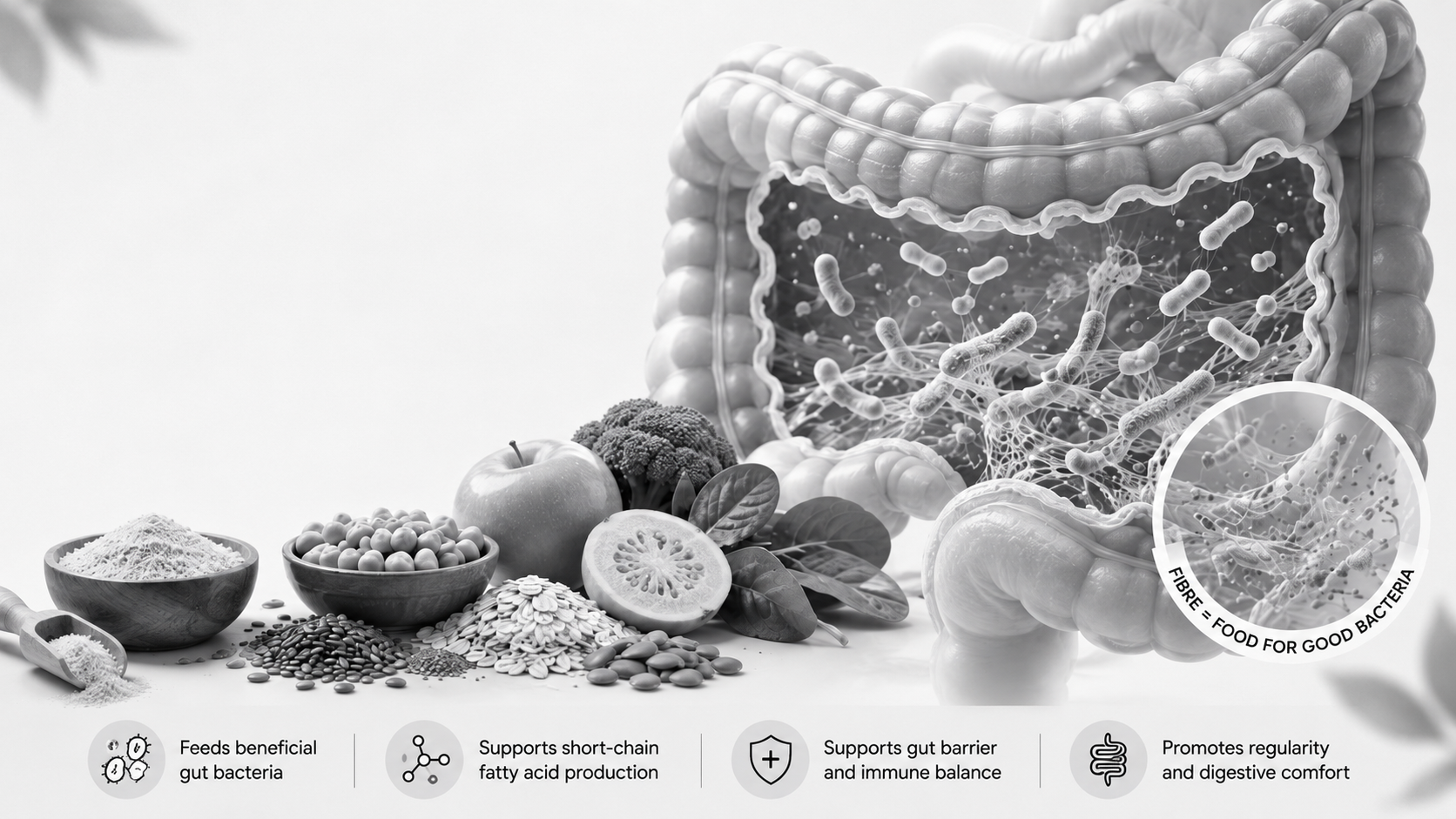
Fibre and the Microbiome: Food for the Organisms Eating With Us
Gut microbes do not only need visitors. They need daily material to work on, and fibre is one of the most important supplies.
Read short note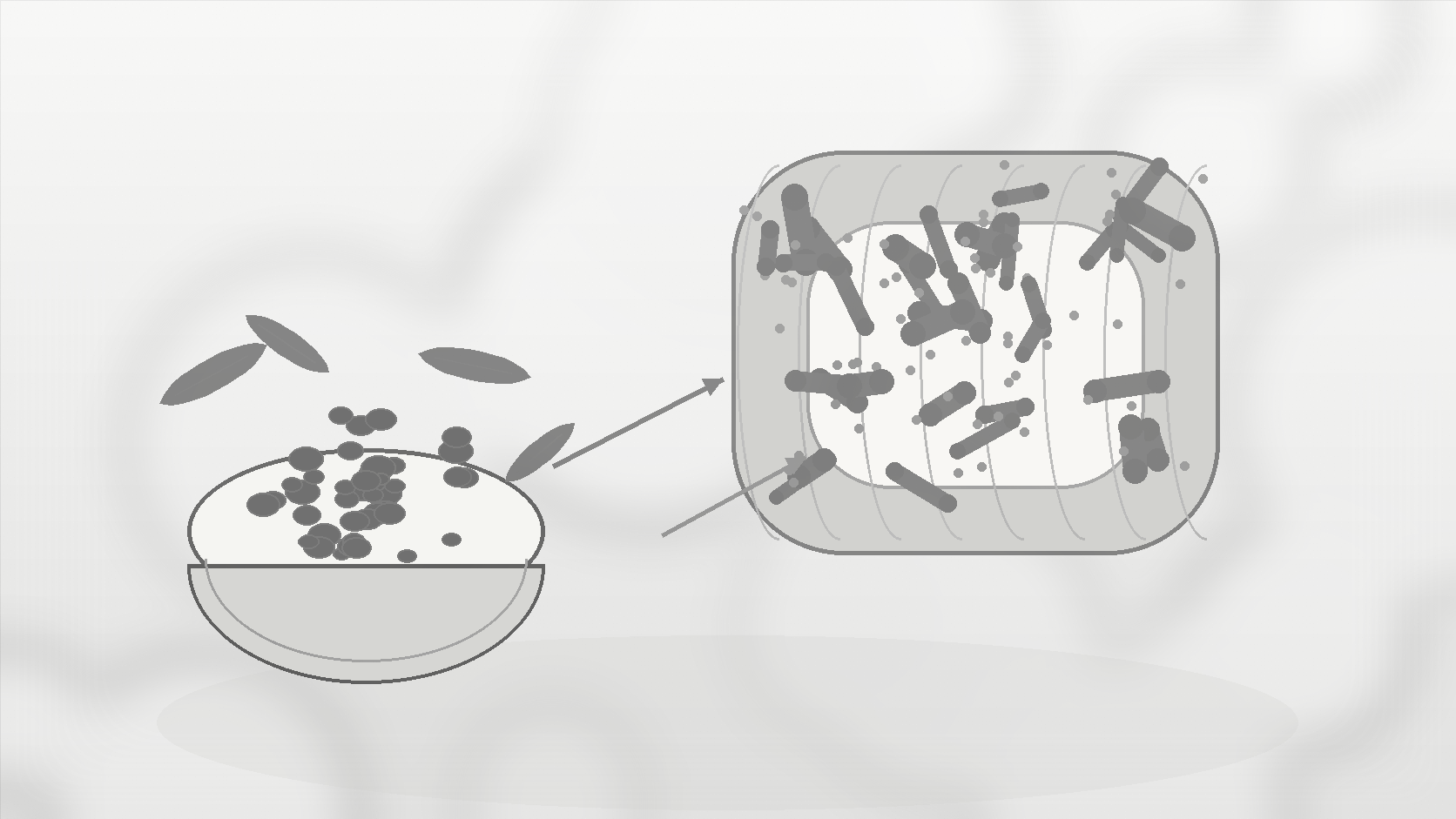
Prebiotics Are Not Probiotics
Probiotics add organisms. Prebiotics supply food for organisms already living in the gut. The difference matters.
Read short note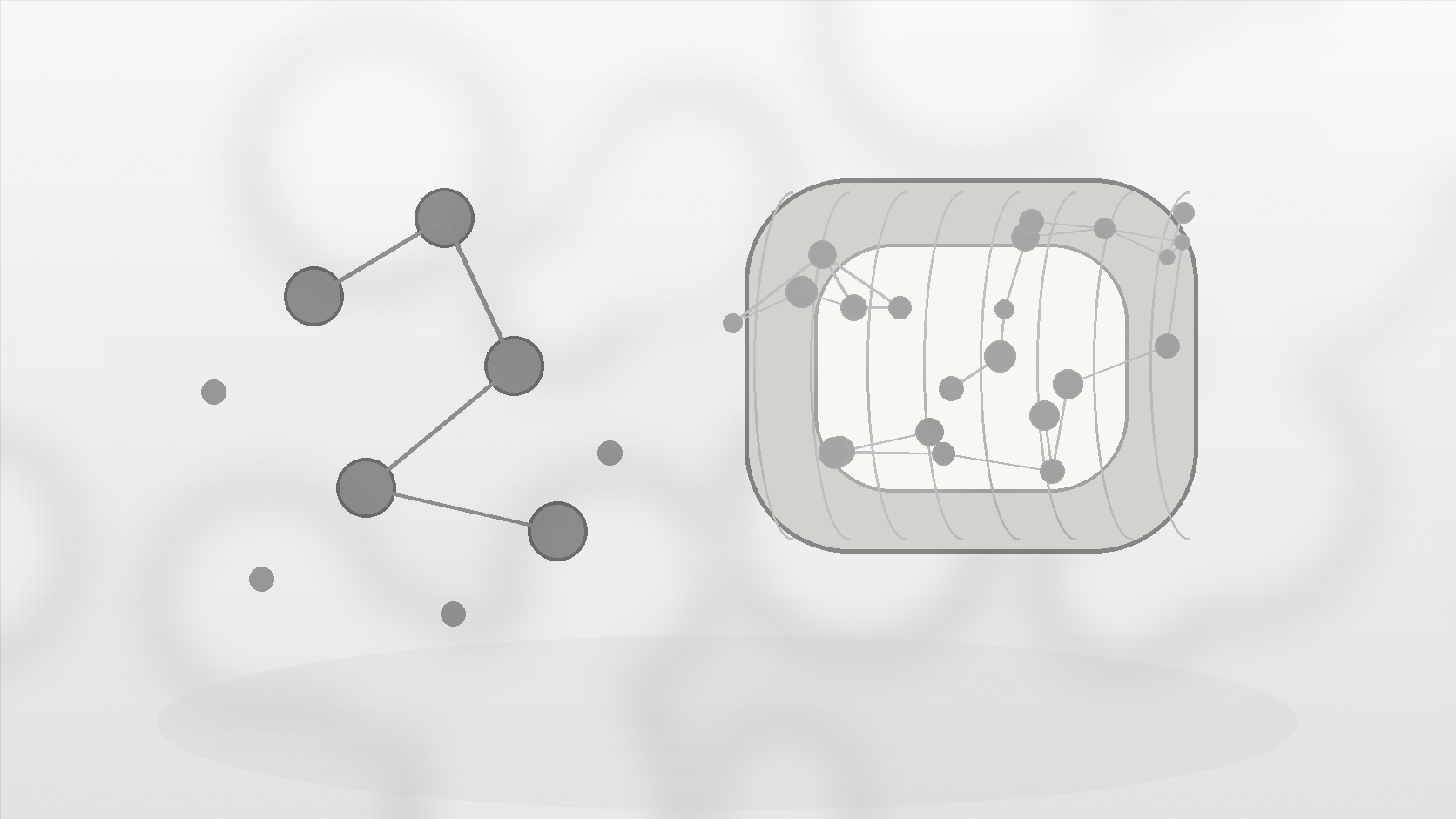
Short-Chain Fatty Acids Are Microbial Messages
When microbes ferment fibre, they can produce small acids that help explain why fibre is more than roughage.
Read short note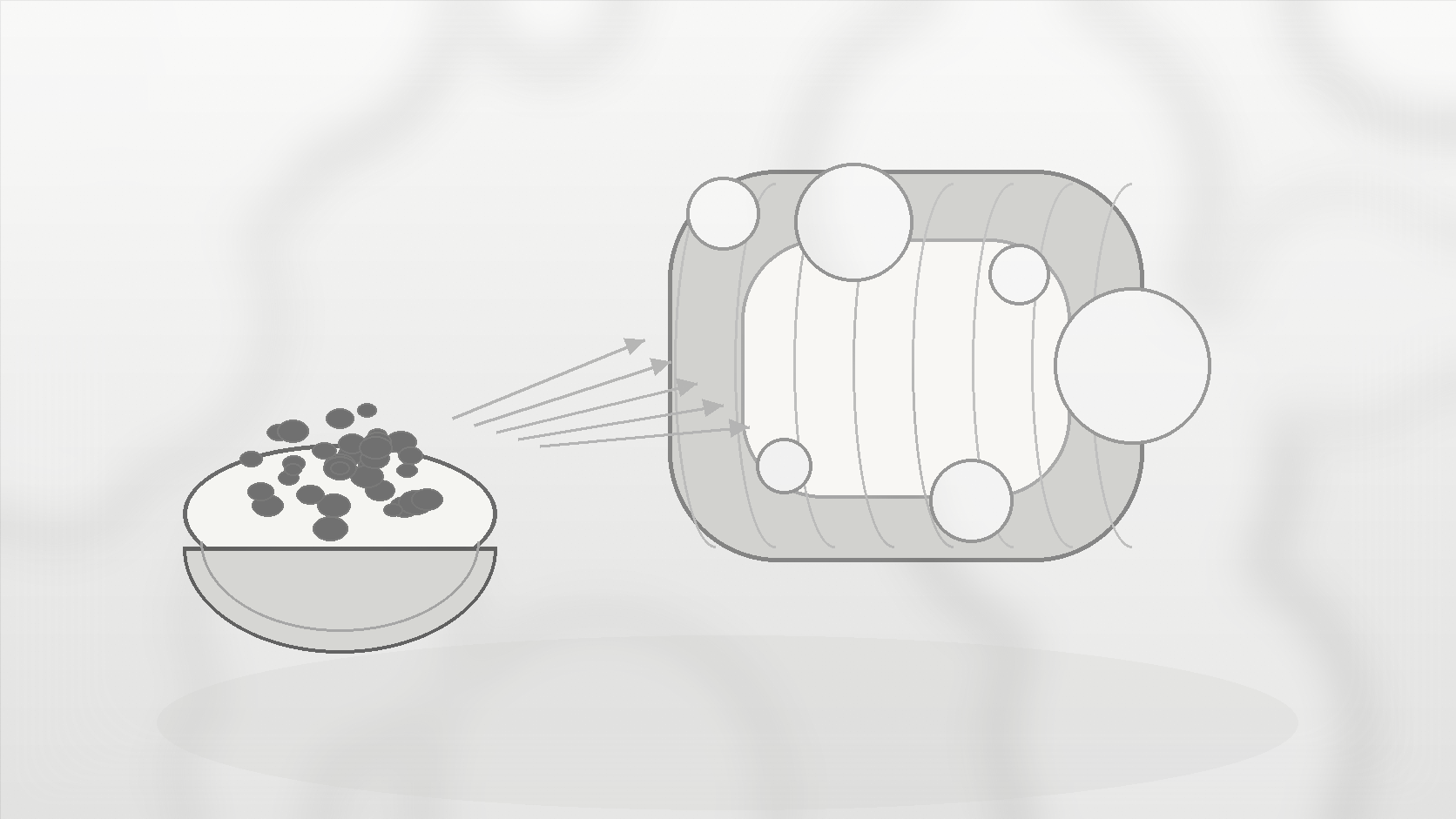
Gas Is Not Always a Sign of Harm
A little gas can be part of fermentation. Too much discomfort usually means the fibre change is too fast or poorly matched.
Read short note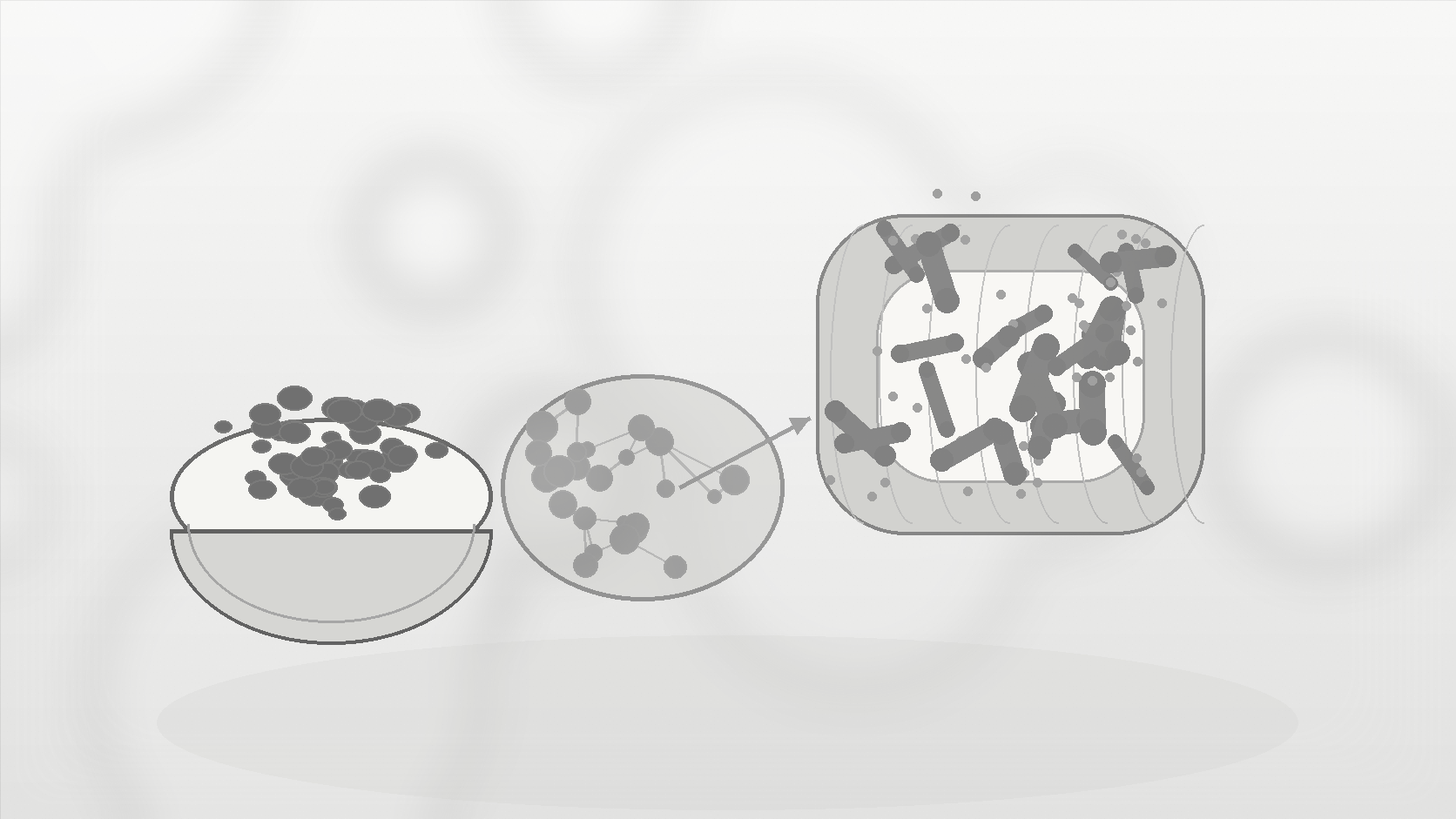
Psyllium and the Microbiome: Not a Simple Story
Psyllium is valued for gel formation and water holding. Its microbiome role is more nuanced than aggressive fermentation.
Read short note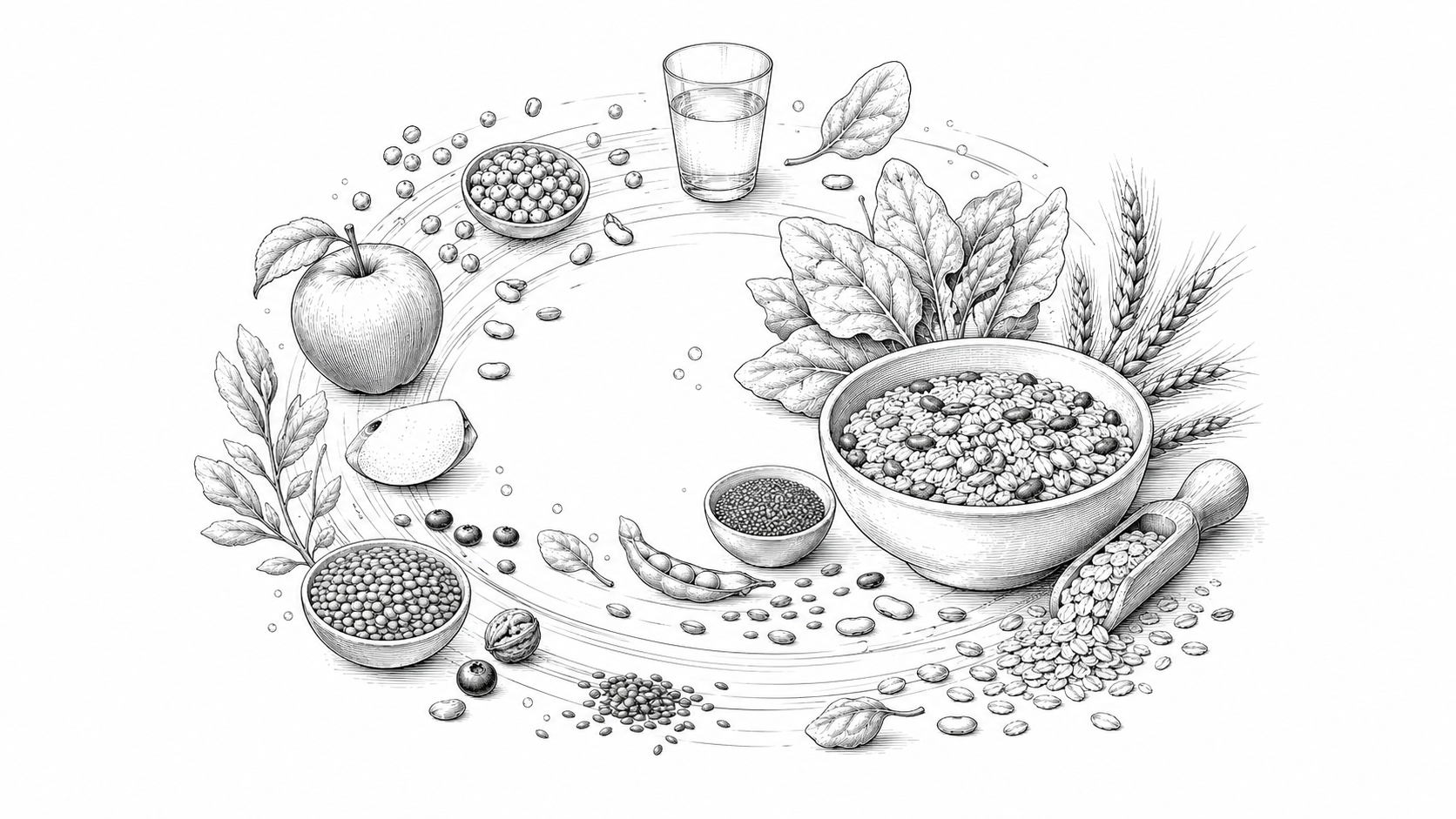
What Daily Fibre Adds Back
Meeting fibre needs is not only about restriction. It adds structure, water handling, microbial substrate, and better meal behaviour.
Read short note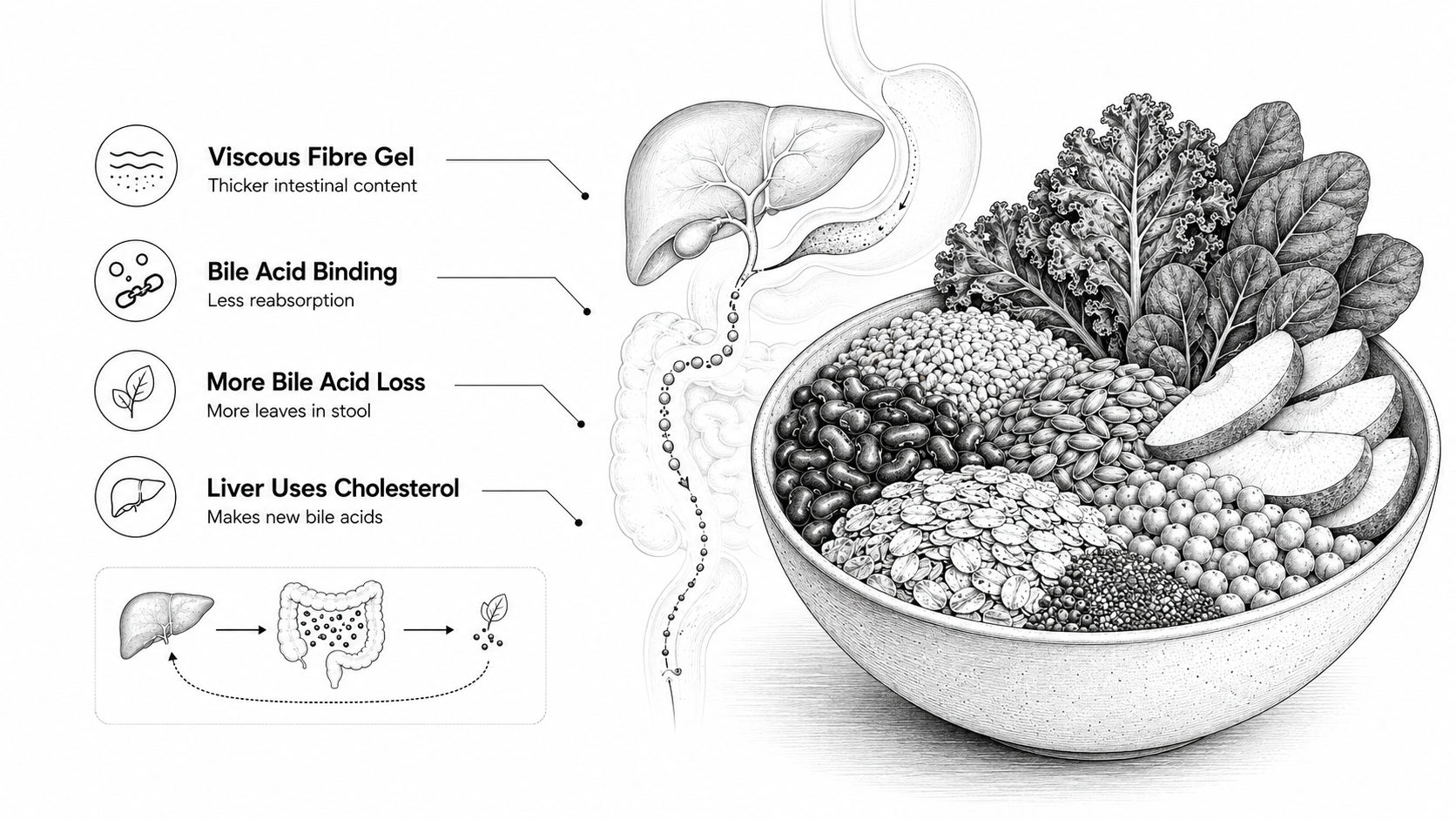
Fibre and Cholesterol: A Quiet Route Through Bile Acids
Certain viscous fibres can change how bile acids move through the gut, which is one route connecting fibre and cholesterol metabolism.
Read short note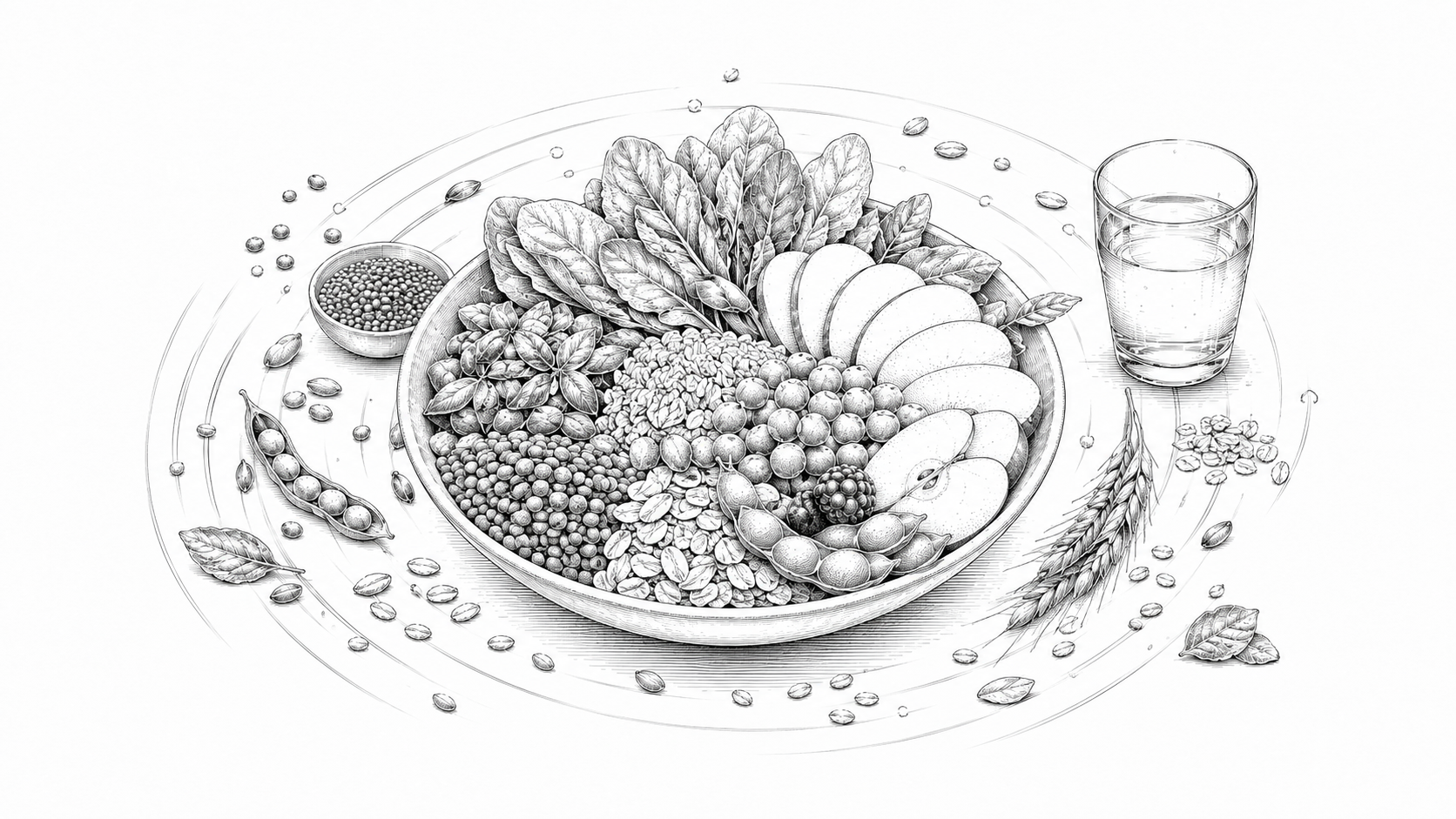
Better Digestive Rhythm Is the Quiet Gain
A better fibre pattern can support stool form, ease, predictability, and a calmer digestive routine.
Read short note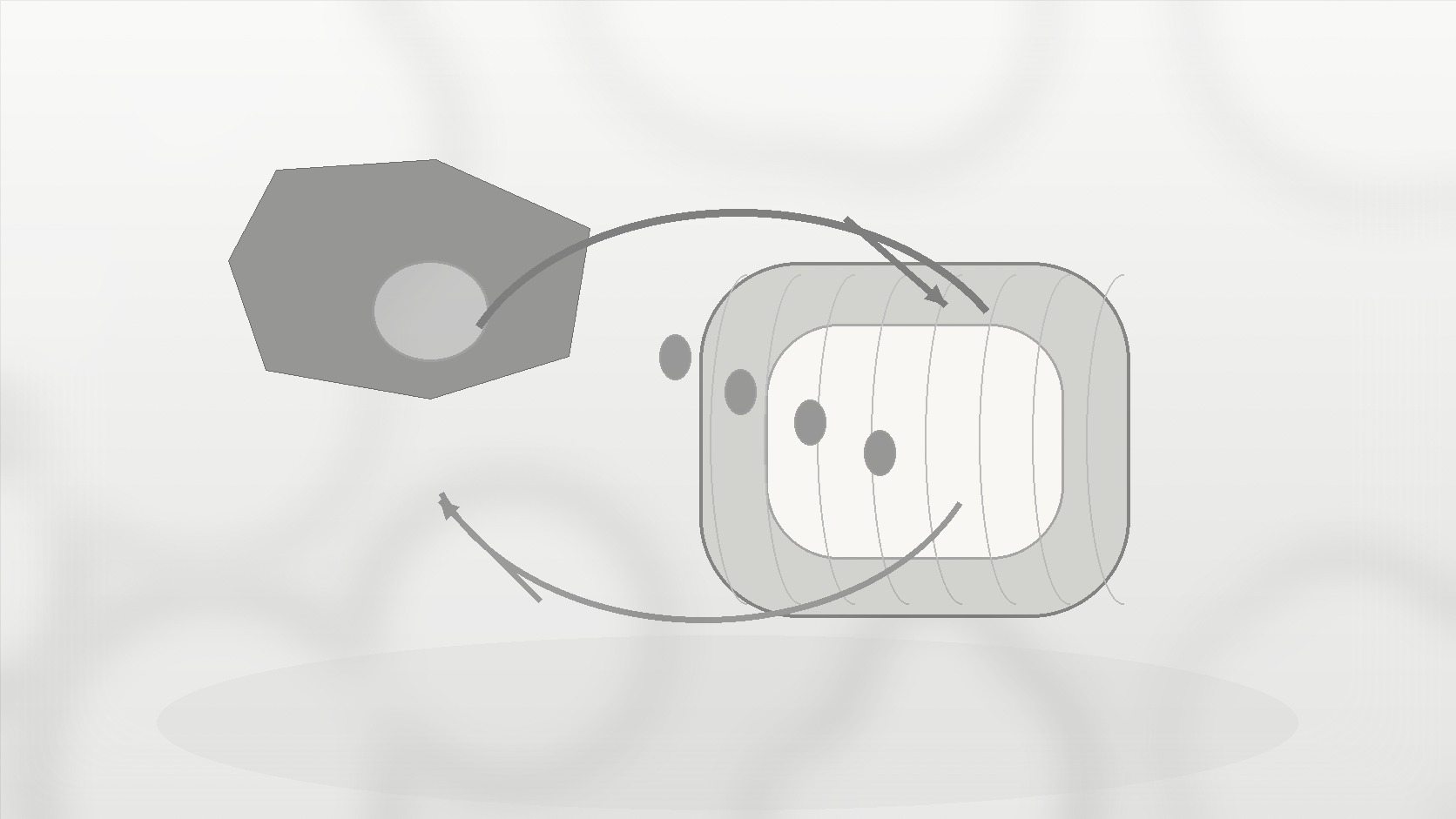
Bile Acids Are Meant to Return
Bile acids are designed for recycling. Understanding that loop makes the fibre mechanism easier to see.
Read short note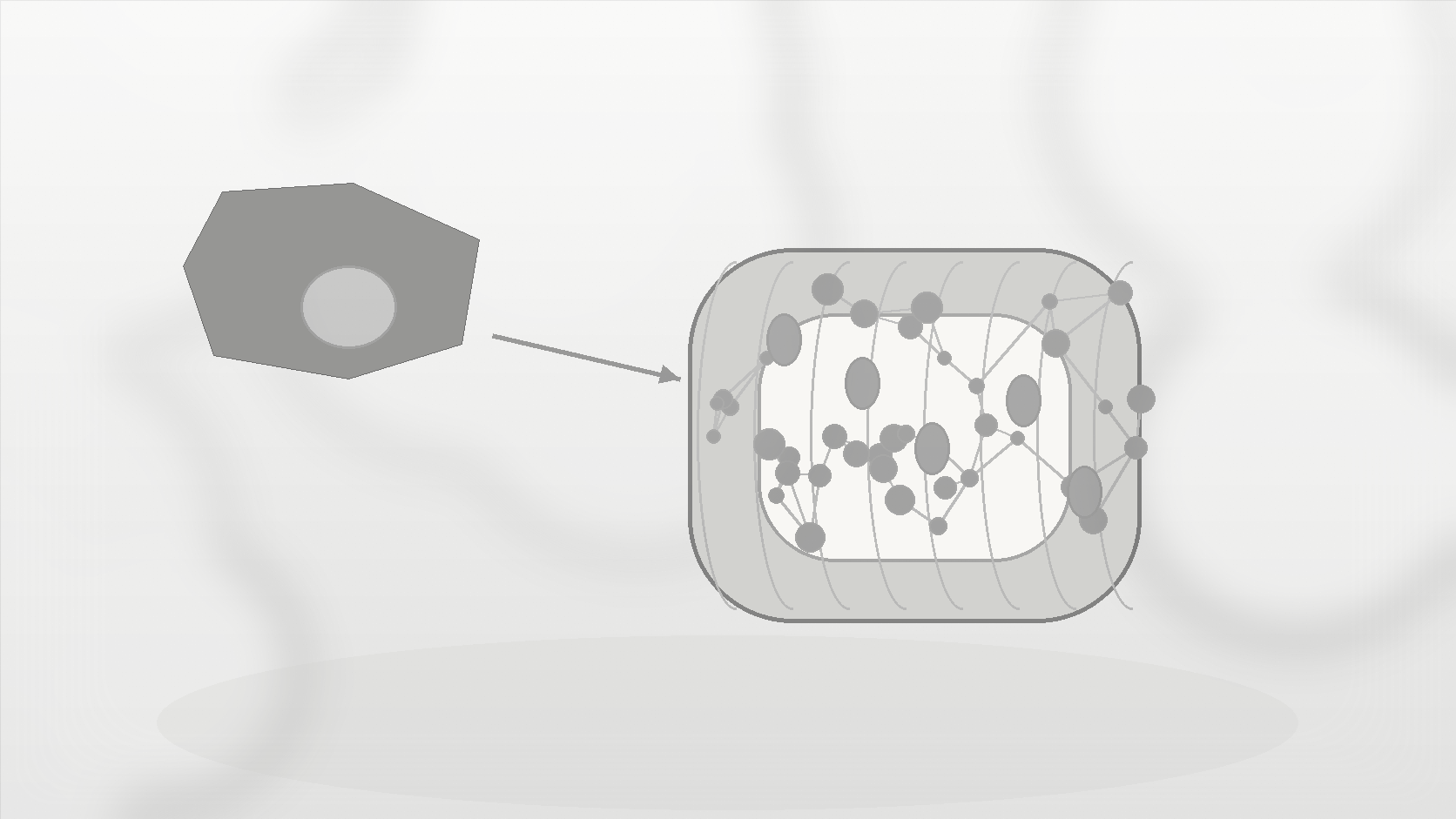
Fibre Can Interrupt the Recycling Loop
A viscous fibre gel can make bile acid reabsorption less efficient, which changes what the liver has to replace.
Read short note
The Gel Is the Mechanism
For cholesterol-aware fibre discussions, the physical gel often matters more than the word soluble.
Read short note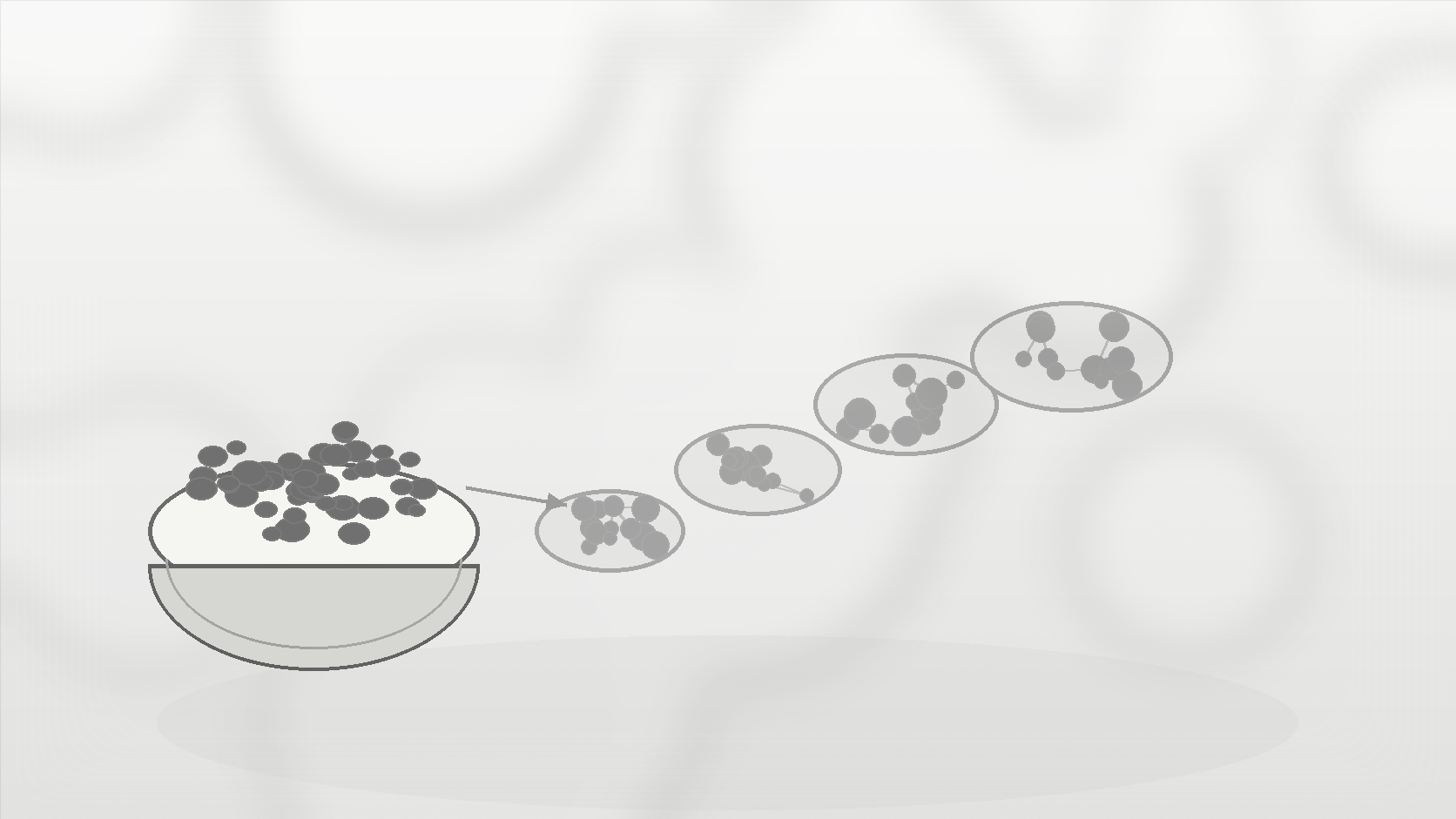
Why Psyllium Is Different From Many Fibres
Psyllium stands apart because it can swell, hold water, and form a viscous gel at practical use levels.
Read short note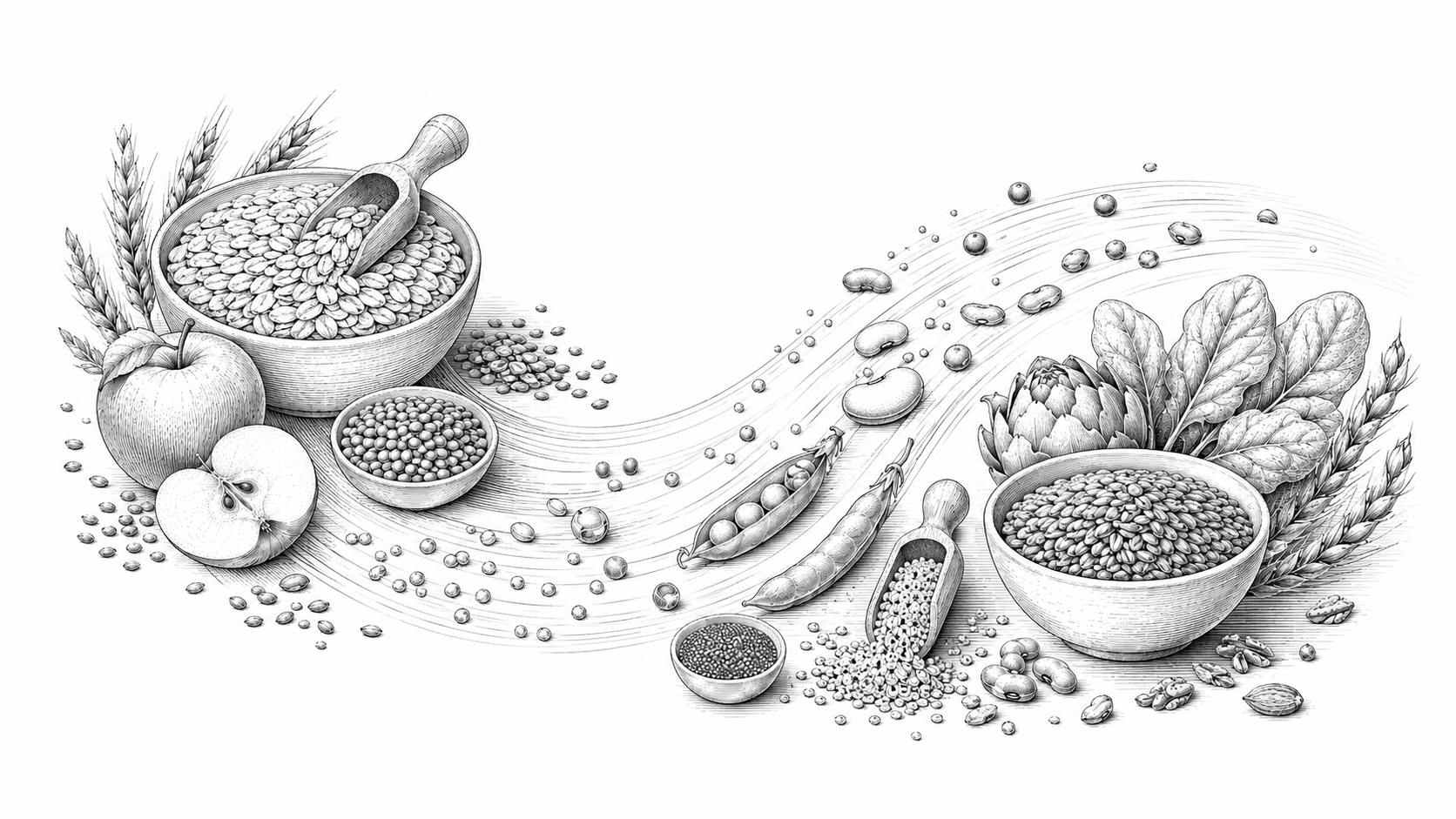
Fibre Makes Food Feel More Complete
A meal can contain calories and still feel unfinished when it gives the gut very little structure.
Read short note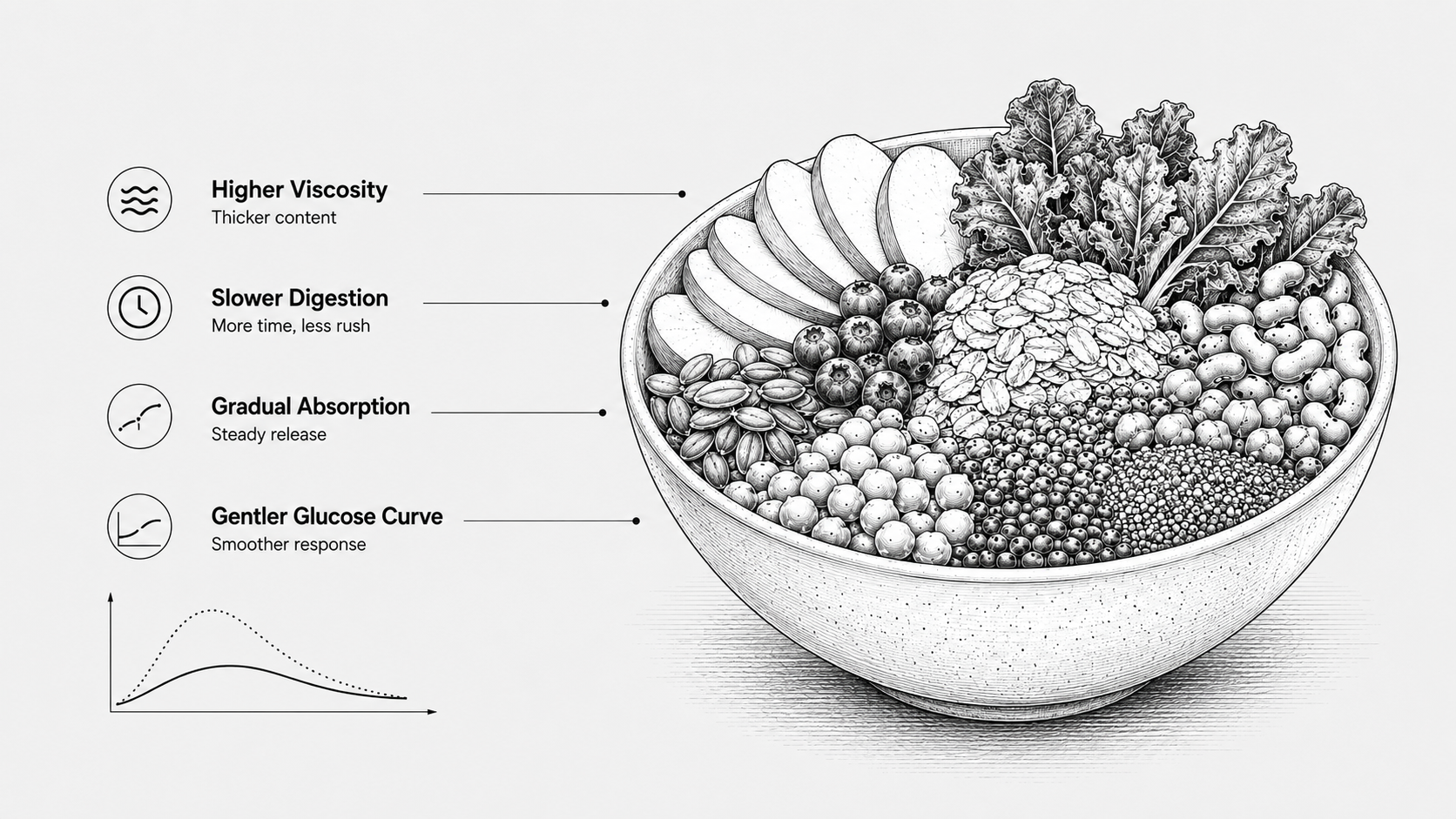
Fibre and Glucose: The Speed of Absorption Matters
Blood glucose response is shaped by how fast carbohydrates are digested and absorbed, not only whether carbs are present.
Read short note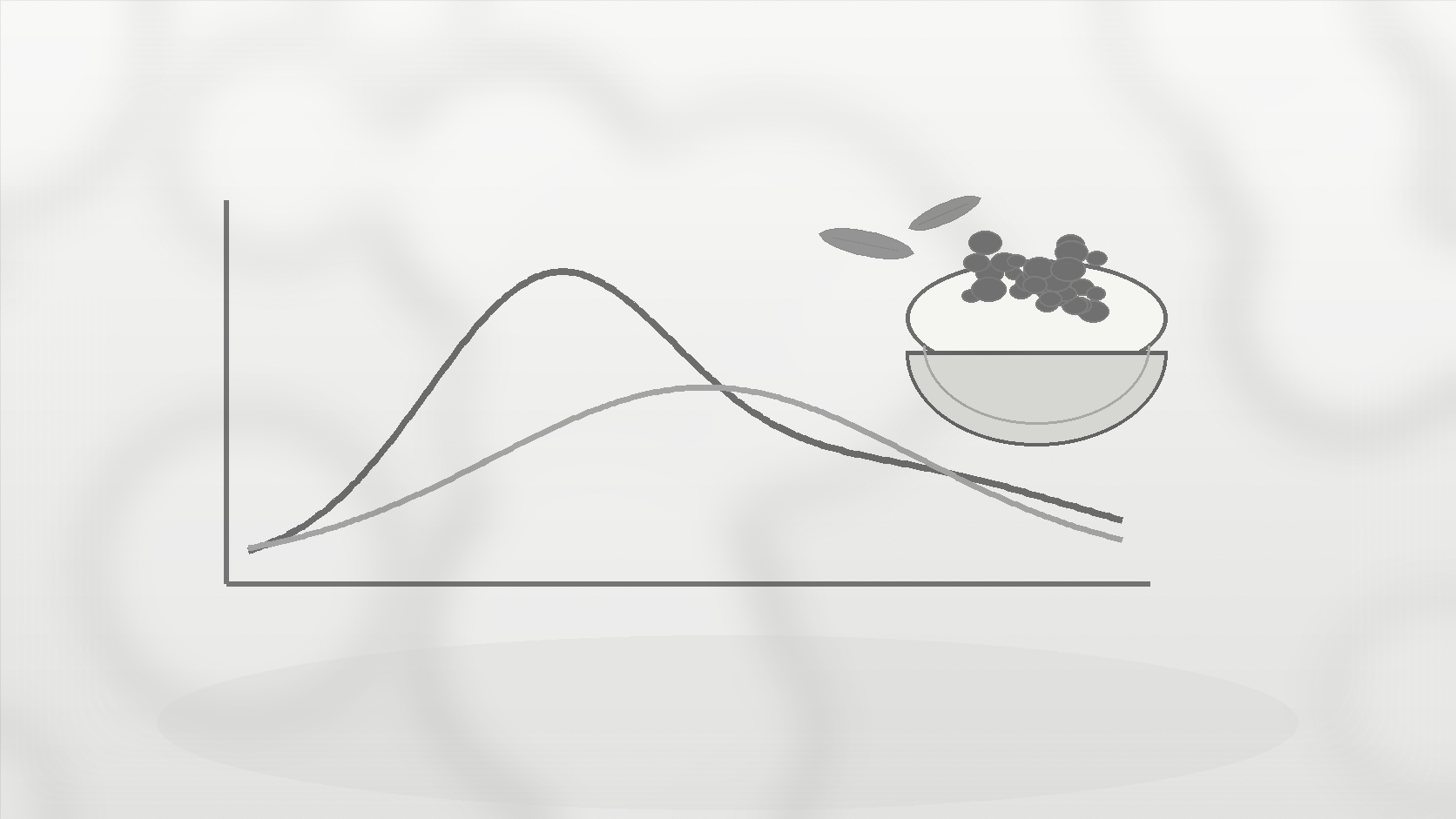
The Glucose Curve Matters
The same carbohydrate quantity can feel different in the body when absorption is fast, moderate, or slowed by meal structure.
Read short note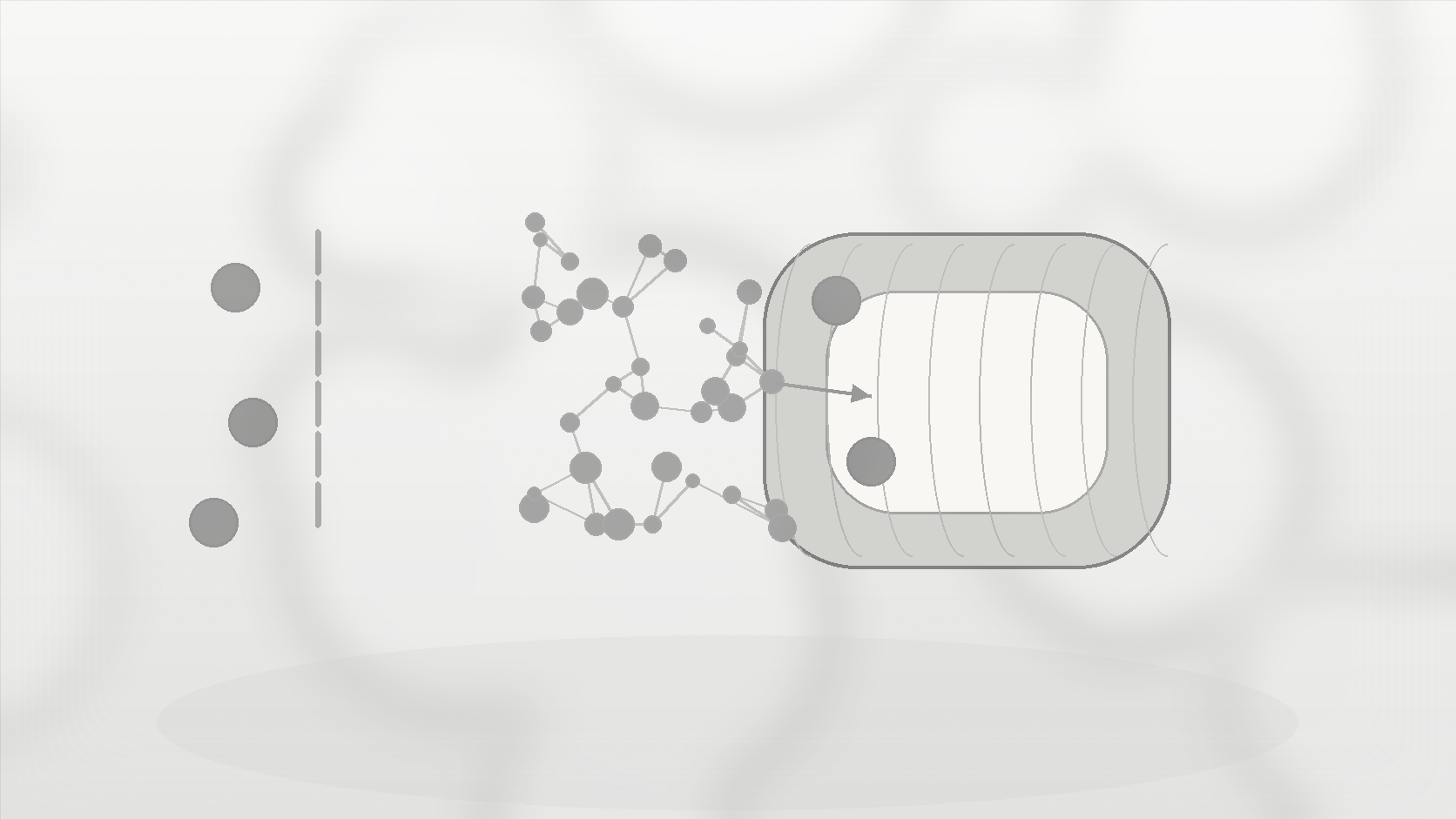
Viscosity Is a Mechanism
In glucose-aware formulations, viscosity can change enzyme access, mixing, and the speed of nutrient movement.
Read short note
Fibre Does Not Make Sugar Harmless
Adding fibre to a sweet product does not erase the sugar. It only changes part of the digestion context.
Read short note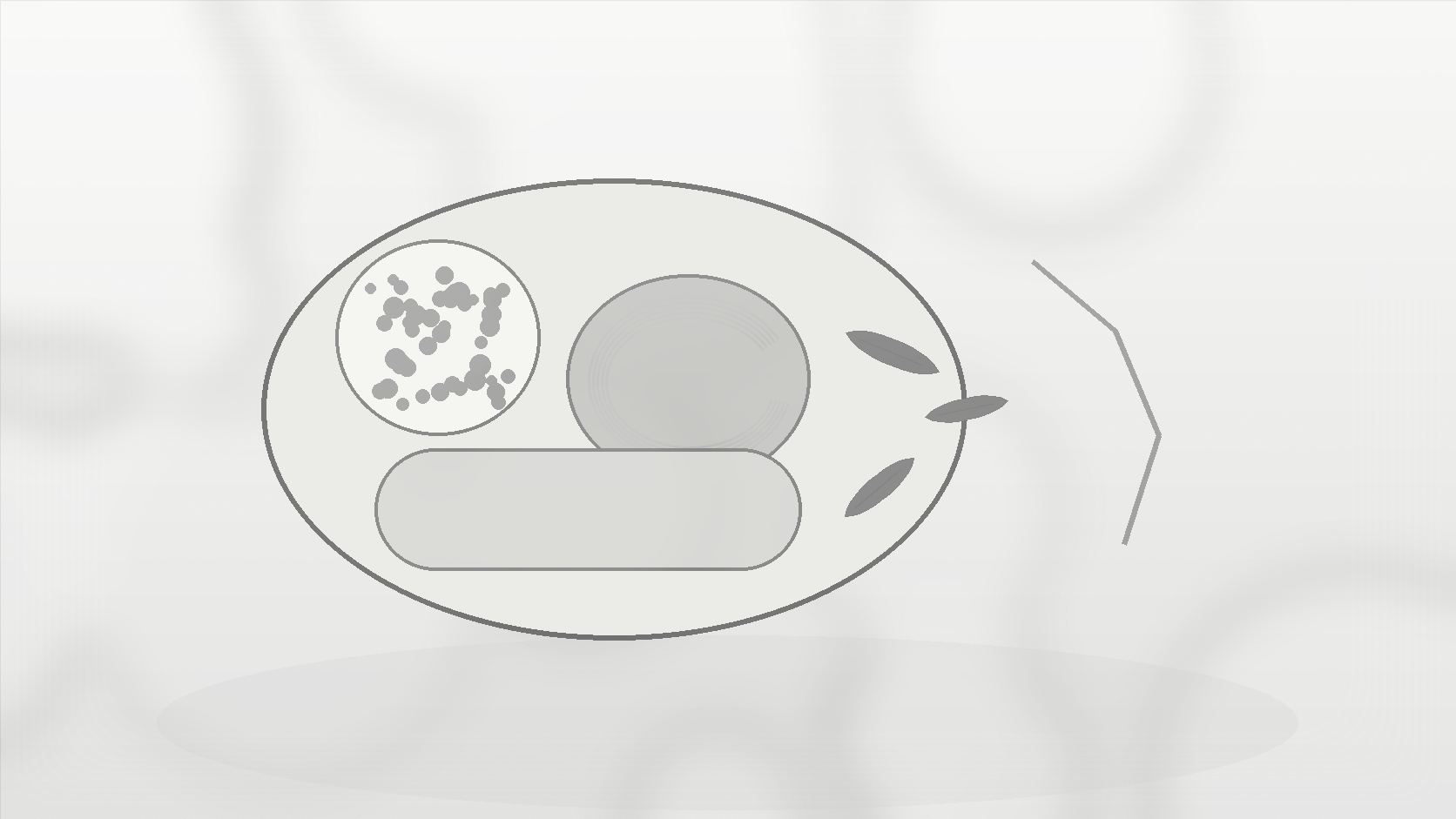
Rice, Roti, Dal, and the Meal Effect
The glucose response to a staple food changes when the plate includes pulses, vegetables, fat, texture, and fibre.
Read short note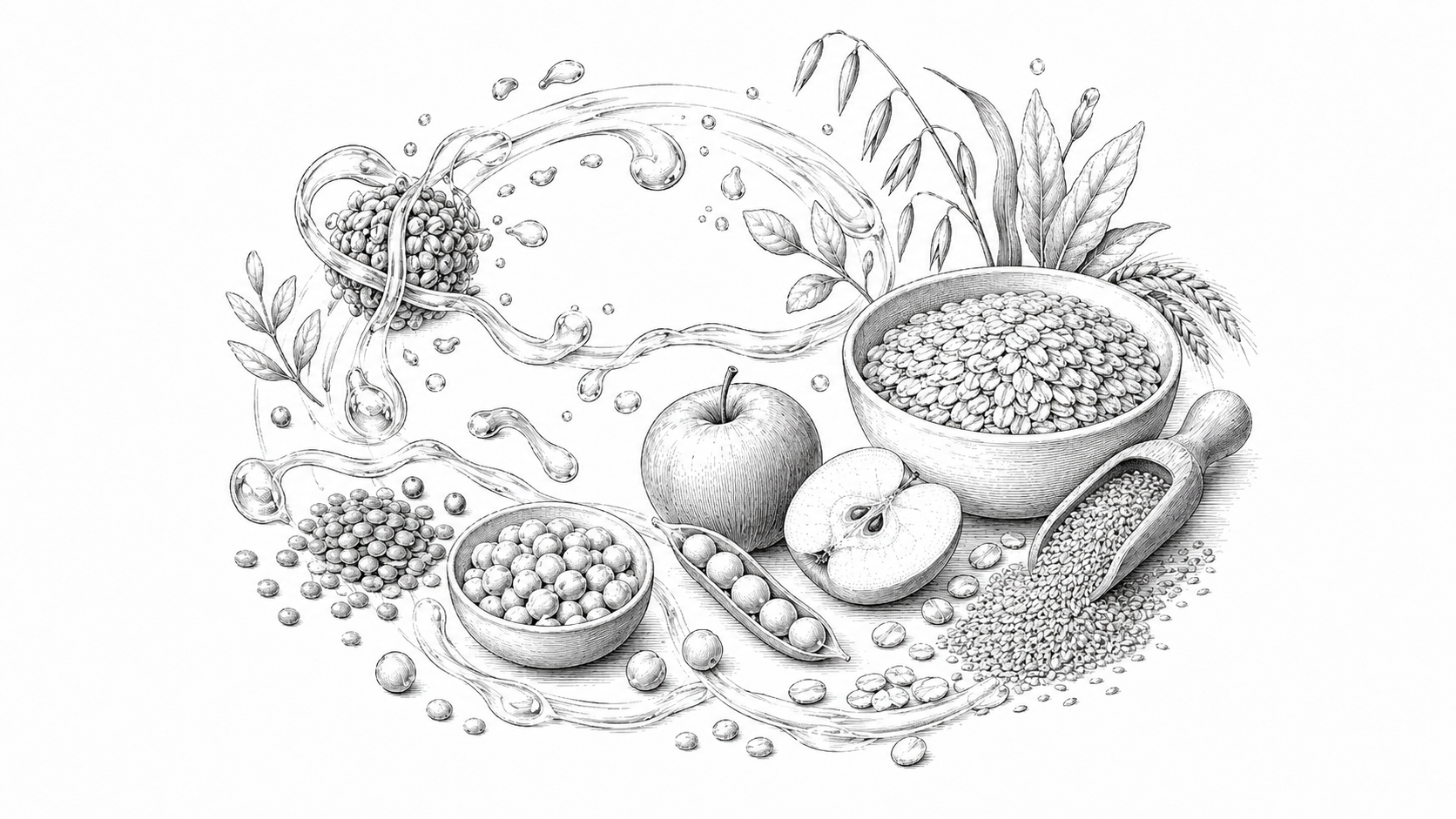
Fibre and Water Belong Together
Water helps fibre swell, soften, gel, and move comfortably through digestion. The pair matters.
Read short note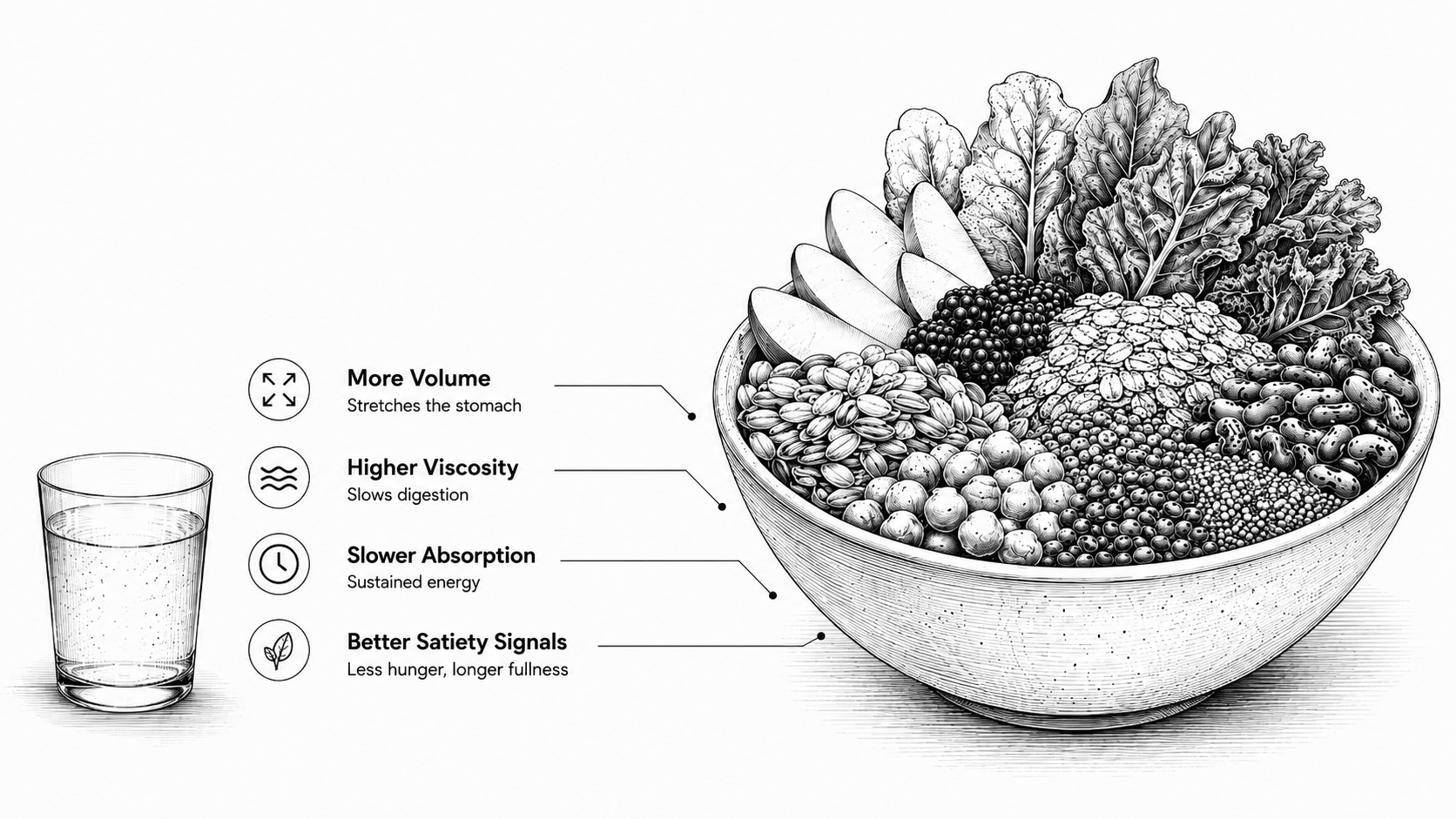
Fibre and Fullness: Why Texture Changes Appetite
Fullness is not just about calories. Texture, viscosity, chewing, and stomach stretch all change the eating experience.
Read short note
Appetite Is Not Just Willpower
Hunger and fullness are shaped by food structure, digestion, signals, sleep, stress, routine, and the meal environment.
Read short note
Texture Is Information
The mouth and stomach read texture before a nutrition panel ever matters. Fibre helps shape that signal.
Read short note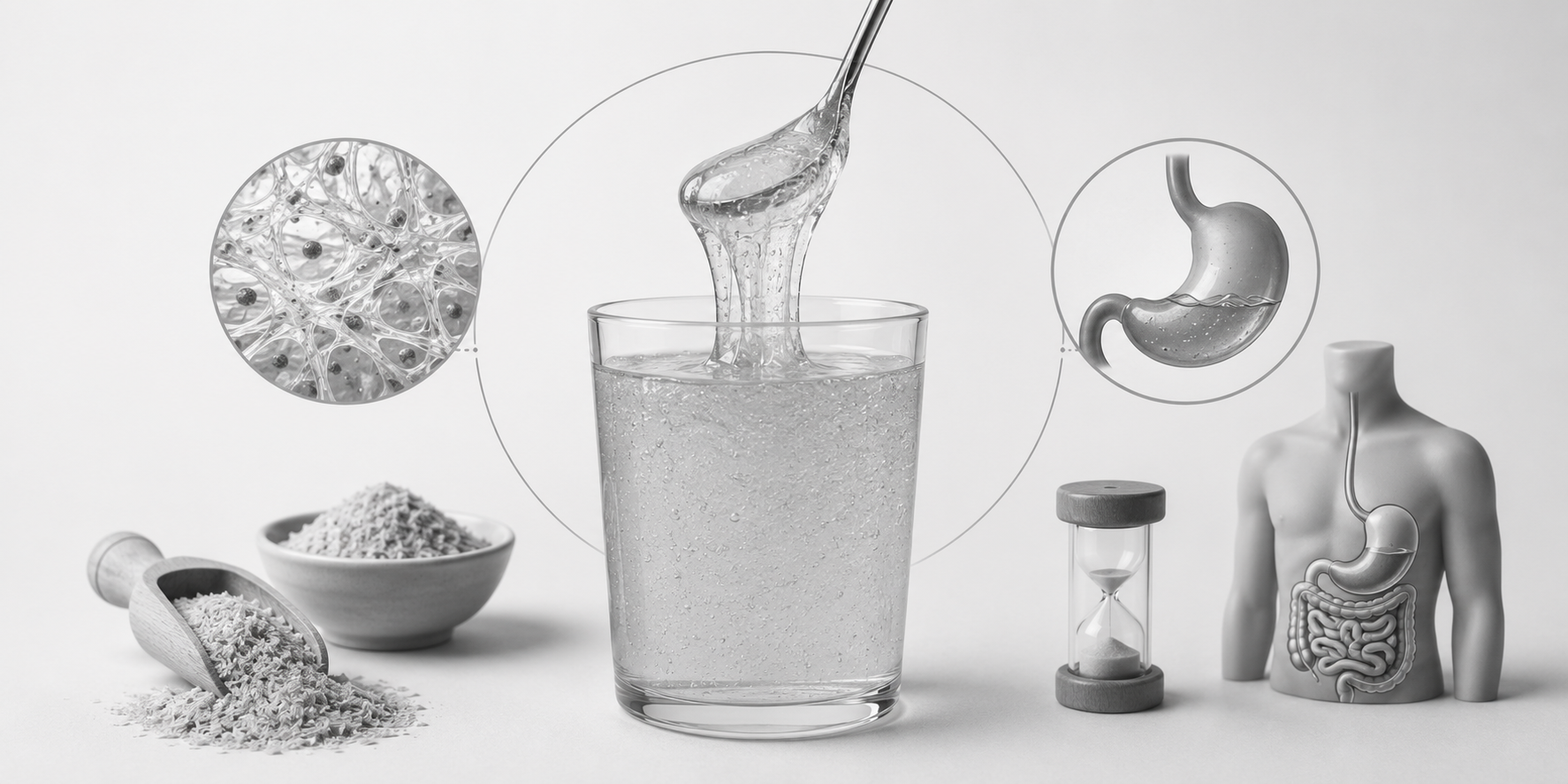
Viscosity Is the Hidden Part of Fullness
A drink or meal can feel more complete when fibre changes body, thickness, and movement through digestion.
Read short note
Why Liquid Calories Often Fail at Fullness
Liquids can deliver energy quickly while giving the body fewer texture, chewing, and structure signals.
Read short note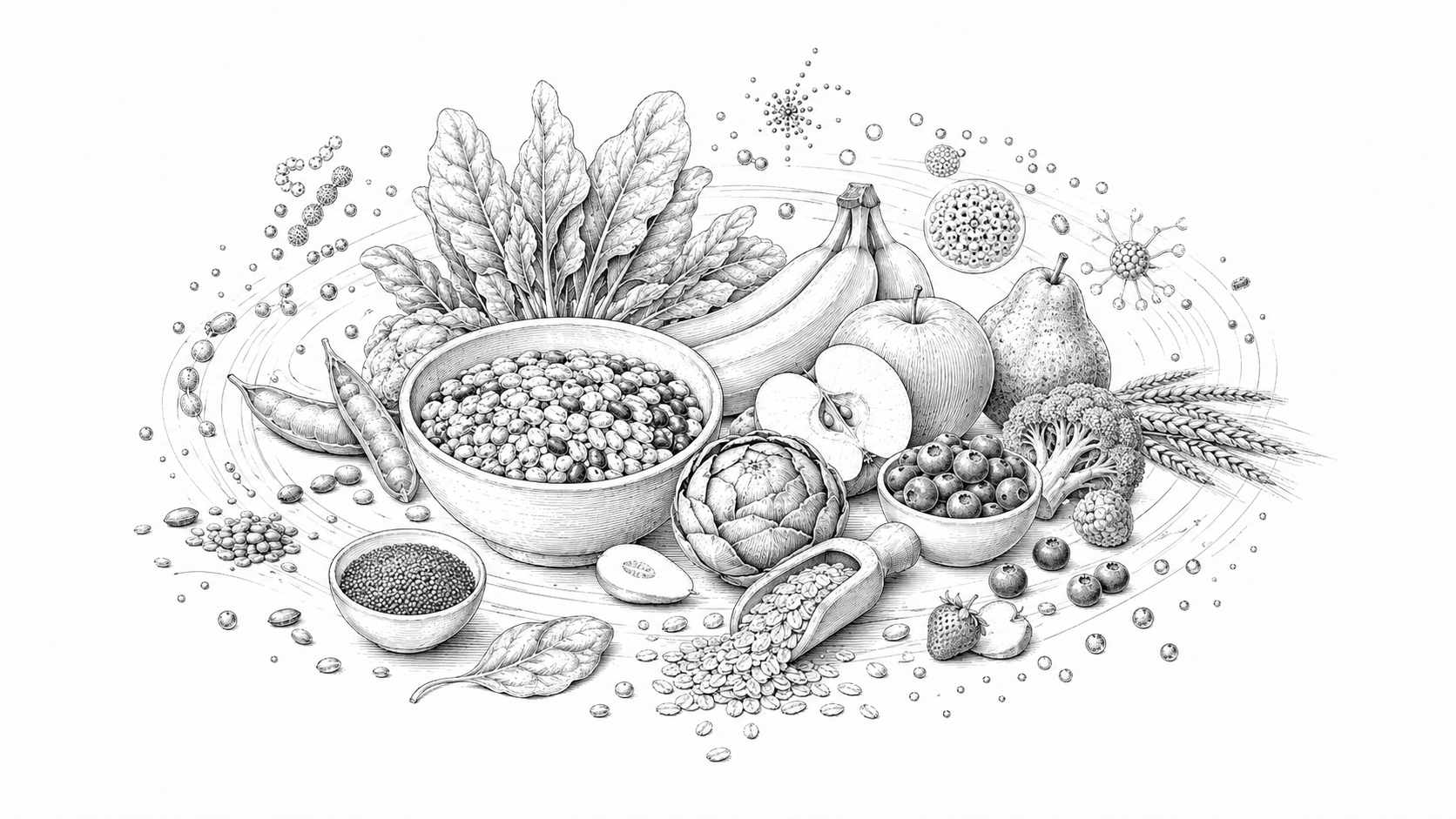
Fibre Is Routine, Not Emergency Correction
Daily fibre works better as a steady food pattern than as a rescue move after digestion has already gone wrong.
Read short note
Fibre Is Not a Constipation Fix. It Is a Daily System.
Fibre should not be treated only as emergency digestive help. It is part of the daily design of food.
Read short note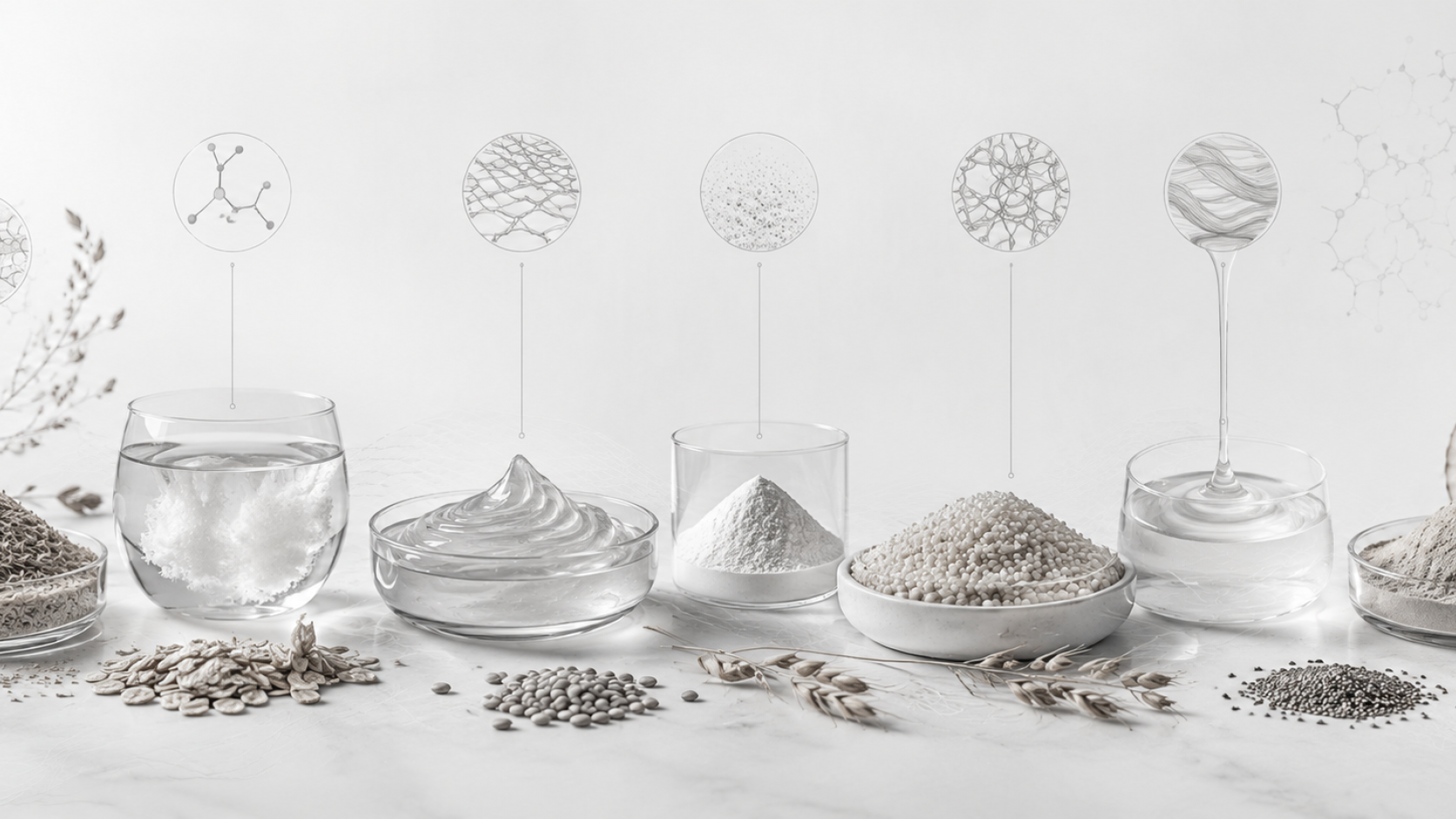
Fibre Is Not One Ingredient
Fibre is a category of plant materials with different sources, textures, water behaviour, and digestive roles.
Read short note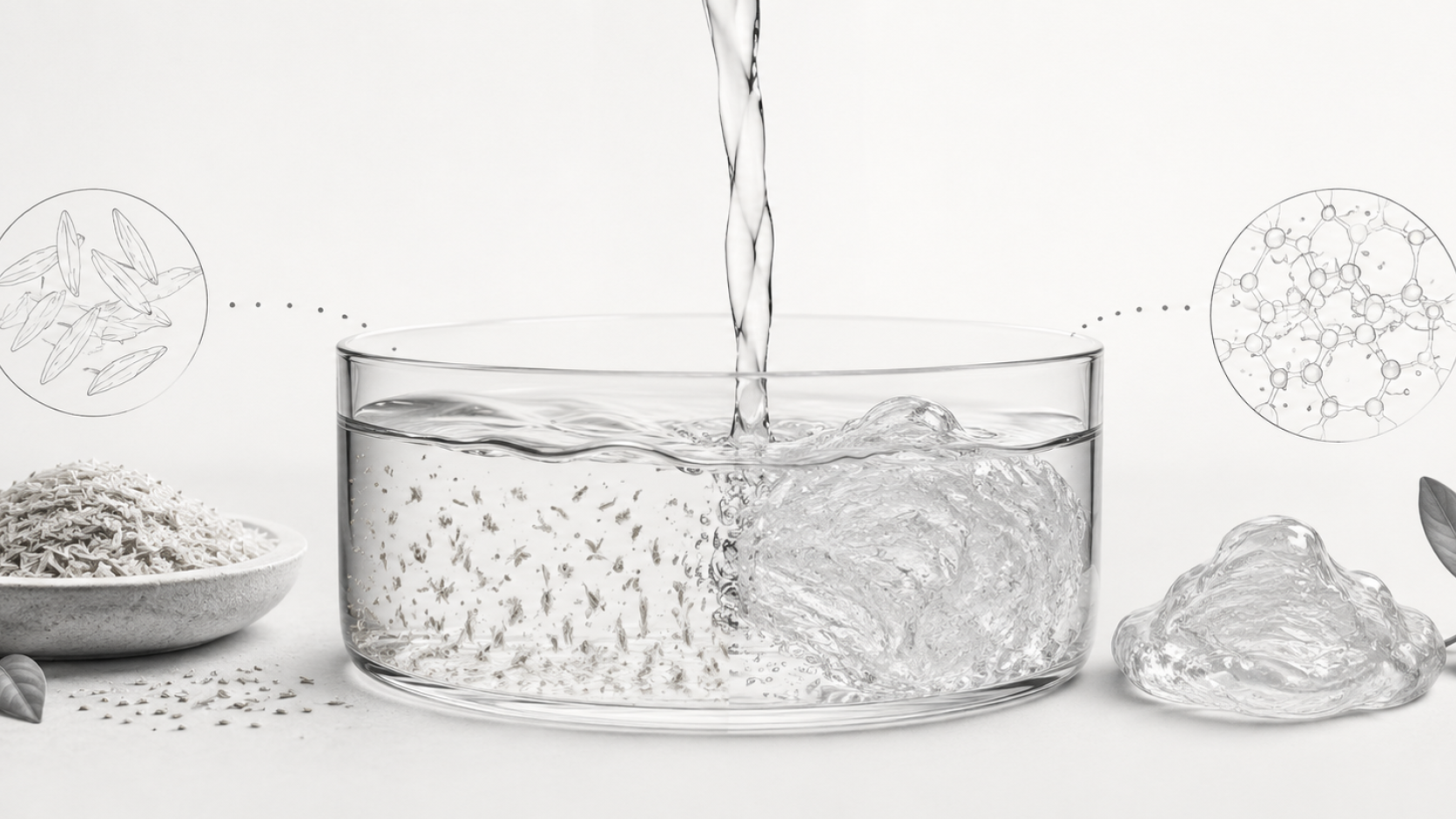
The Physics of Fibre Starts With Water
Water decides whether fibre disperses, clumps, swells, thickens, softens, or becomes difficult to use.
Read short note
Regularity Is Not the Same as Laxation
A good fibre routine is about pattern, stool quality, water, and tolerance, not dramatic digestive force.
Read short note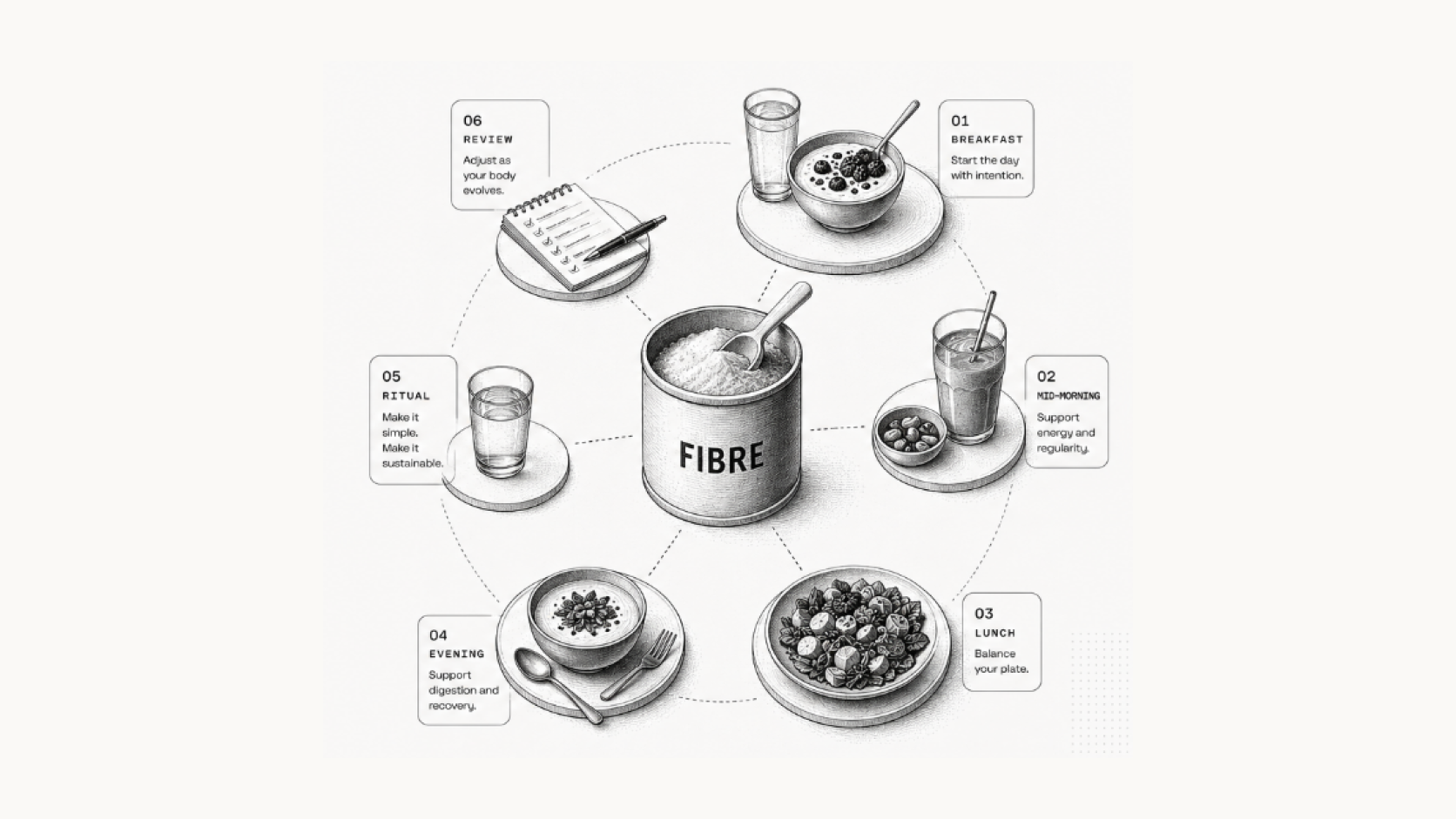
Fibre Is a Daily Design Problem
The challenge is not knowing fibre matters. The challenge is designing meals and products people can repeat.
Read short note