
Hydration
How quickly the fibre takes up water affects wetting, clump formation, preparation time, and final texture.

Our approach
Before a fibre goes into any product or claim, Fybrance studies how it behaves — in water, in powder blends, in food, and in everyday preparation.
A fibre that looks similar on paper can behave differently in use.
Botanical source, growing conditions, husk purity, mesh profile, milling method, moisture, storage, liquid level, pH, minerals, proteins, heat, and shear can all affect performance.
Fybrance measures those variables, so every fibre is understood as a specific plant material with its own measurable behaviour — not treated as a generic powder.
What we study
How quickly the fibre takes up water affects wetting, clump formation, preparation time, and final texture.

The thickness curve matters: how fast viscosity develops, how high it rises, and how it changes during the consumption window.

Swelling describes how the material expands and holds water. It is central to gums, mucilages, and many plant fibre systems.

Powder entry, surface wetting, shaker behavior, spoon-stir behavior, and hard-clump tendency determine whether a format is pleasant to prepare.
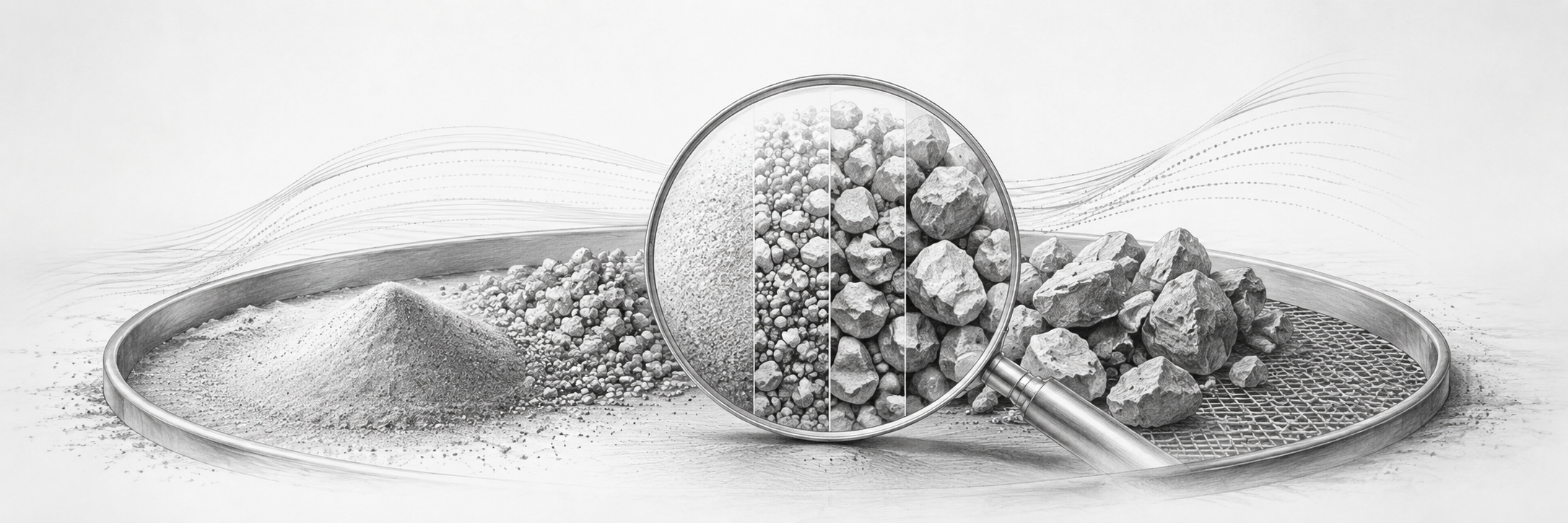
Mesh, fines, coarse particles, and milling consistency affect flow, mouthfeel, hydration speed, and visual quality.
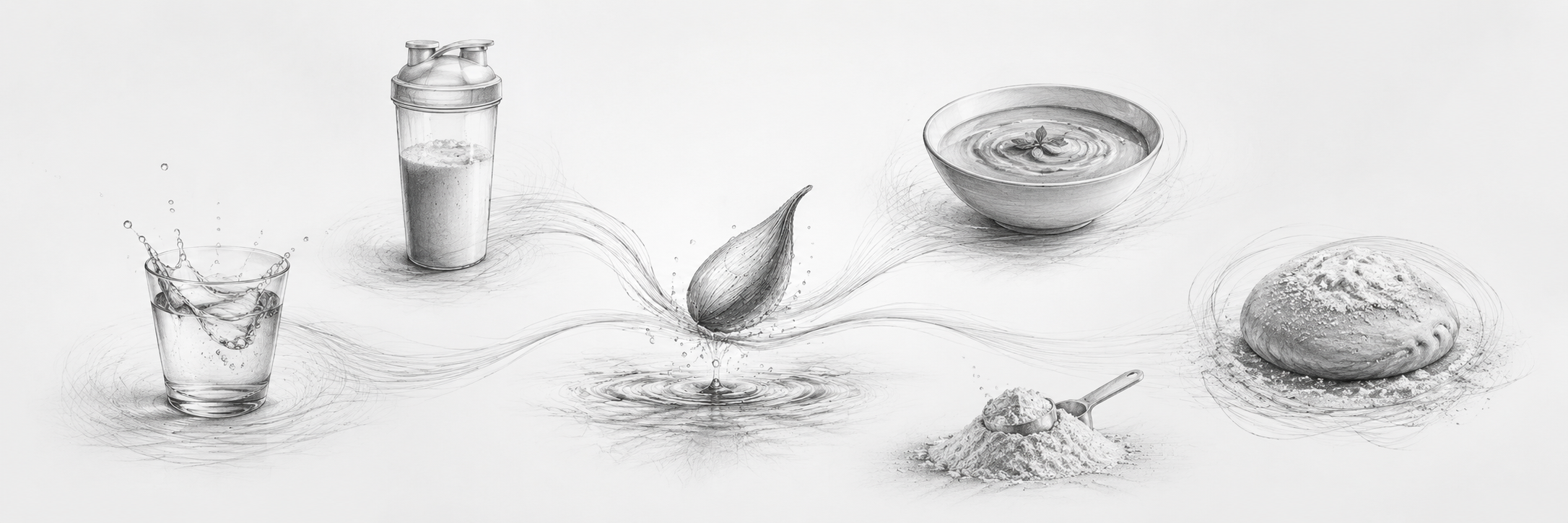
Fibre behaves differently in water, milk, protein shakes, bakery systems, soups, premixes, and high-mineral or low-sugar formats.
Technical answers
Hydration controls how quickly fibre takes up water. It affects powder wetting, clump formation, preparation time, viscosity development, texture, and whether the experience is repeatable in daily use or food processing.
Some plant fibres can build strong viscosity when they swell in water. The rate and level of viscosity affect drink thickness, mouthfeel, serving window, product handling, and suitability for the intended format.
Swelling behavior describes how a fibre expands and holds water. It is especially important for gums, mucilages, resistant starches, and plant fibres used for body, texture, or water management.
A fibre behaves differently in plain water, protein shakes, milk, bakery dough, soups, sweetened powders, mineral systems, and heated foods. Matrix fit connects the fibre behavior to the actual product environment.
India gives Fybrance a strong starting point for plant fibres.
India has a long history of growing and processing plant ingredients, from grains and pulses to gums, mucilages, resistant starch sources, and botanical materials used in food and nutrition.
Fybrance works from within that sourcing base but goes further: understanding the raw material, testing it in real applications, and checking how the finished product performs. The goal is to be a fibre partner whose claims can be checked and trusted.
The working standard
Fybrance Core is the internal technical standard behind the company's fibre work. It covers raw material selection, particle size, hydration, viscosity, dispersion testing, taste and mouthfeel review, preparation notes, and quality documentation.
This foundation keeps every public claim tied to a known source, measured behaviour, and reviewed quality.
The working rule
A fibre earns trust when we know exactly what it is, we have measured how it behaves, and the documents confirm both. If any of those is missing, the claim waits.