
Formulation option
Lecithinated Psyllium
Lecithinated psyllium is a surface-treatment option for husk or powder formulations where initial wetting and dispersion need attention. Lecithin source, treatment level and finished-product behaviour are selected for the application.
Composition and specifications agreed for your application.
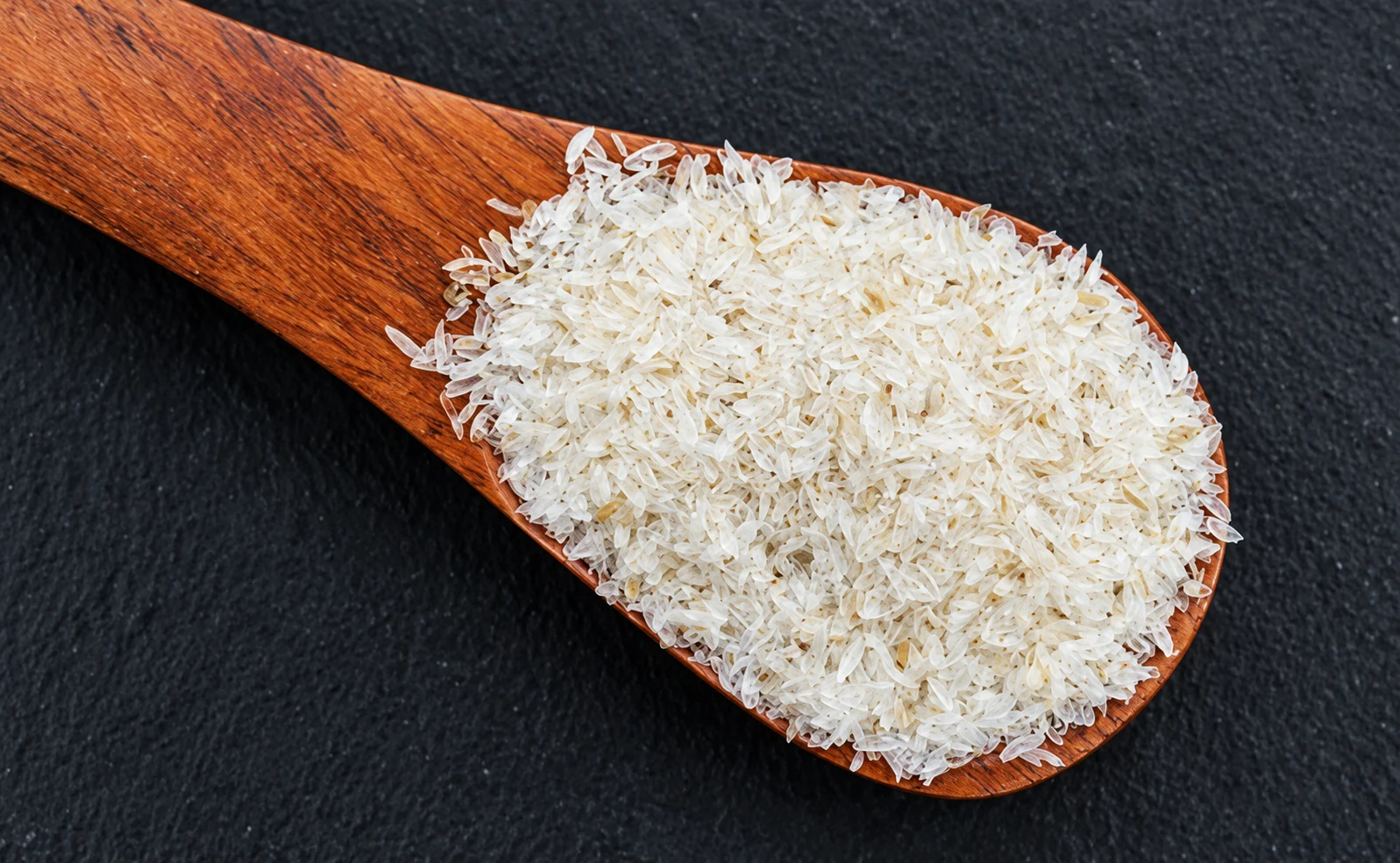
Lecithin surface treatment
Surface treatment of selected husk or powder
What lecithinated psyllium changes
The first contact between dry psyllium and liquid can decide whether particles distribute through the drink or collect into dry-cored lumps. Lecithinated psyllium introduces a food-grade lecithin treatment at the particle surface. The formulation objective is more manageable initial wetting, while recognising that psyllium still hydrates and develops viscosity.
Lecithin is a family of ingredients, not a single interchangeable material. Source, phospholipid profile, carrier and application method can affect the finished powder. Sunflower-derived and soy-derived options need separate ingredient and allergen review. No source or allergen status is assumed for this enquiry-led option.
Surface treatment and process selection
Begin with a selected husk or powder profile, then assess how the lecithin can be distributed across that material. A treatment must be sufficiently uniform for the intended preparation; adding lecithin to a dry blend does not by itself demonstrate a coated surface. The development review considers mixing, surface coverage, moisture and any drying step required by the chosen route.
Coating and agglomeration can occur together. This option is organised by its lecithin surface treatment. If particle enlargement is also required, compare it with an agglomerated psyllium option and specify both the surface treatment and resulting particle distribution.
Where to consider it
Drink powders, sachets and nutrition premixes are useful development contexts when the observed issue is initial liquid contact. Evaluate the option in water and in the intended recipe: protein, flavour, mineral and sweetener systems can change the result. A suitable preparation window matters more than an unsupported claim of instant solubility.
Preparation considerations and limits
Check addition order, mixing energy, floating material and the viscosity rise during the intended drinking period. Evaluate flavour and aroma contributions from the lecithin as well as storage behaviour. Surface treatment does not make psyllium a clear, non-thickening soluble fibre or guarantee a lump-free drink under every mixing condition.
How to evaluate the formulation
Compare the proposed option with the current psyllium at the same psyllium content, not simply the same total powder weight. Supporting ingredients change the amount of psyllium in each gram. Record the liquid, temperature, addition order, mixing method and holding time before comparing samples.
| Evaluation | What to record |
|---|---|
| Wetting and dispersion | Surface floating, dry-cored lumps and distribution after a fixed mixing period. |
| Hydration and viscosity | Development over agreed time points using the same instrument, geometry and temperature. |
| Particle handling | Size distribution, fines, bulk density, flow and changes after transport or blending. |
| Finished-product fit | Appearance, flavour, mouthfeel and behaviour in the complete recipe. |
| Composition and quality | Psyllium content, supporting ingredients, moisture, microbial specification and relevant contaminant results. |
Specifications, documents and sample evaluation
Share your target market, acceptable ingredients, intended process and expected scale. Request the proposed composition and ingredient declaration, a technical data sheet, batch certificate of analysis, allergen information and storage guidance. Origin, residue testing, certification scope and other declarations should be checked for the actual material.
Public information describes a formulation option. Final composition, process, specifications, sample arrangements, packaging, availability and commercial terms are agreed during enquiry. Only relevant, verified documents will be supplied; this page does not offer a downloadable specification or promise certification.
Technical background
Historical publications describe acacia-based psyllium coating and agglomeration and maltodextrin-based psyllium agglomeration. These provide processing background, not proof of a Fybrance SKU or a guarantee for the proposed formulation.
Technical questions
Before you select a format.
Is lecithinated psyllium the same as agglomerated psyllium?
No. Lecithinated identifies a surface treatment. Agglomerated identifies particles joined into larger structures. A material can involve both, but each feature must be specified.
Is the lecithin sunflower-derived or soy-derived?
The source is selected during enquiry against the formulation and ingredient declaration requirements. The public option does not imply a source or an allergen-free claim.
Compare within this category
Other formulation options
Start with your product
What happens when you add psyllium?
Tell us what you are making, how it is prepared and what needs to improve. We will discuss the formulation direction, specification requirements and evaluation scope.